Strategy’s Bitcoin treasury depends on capital markets
A new analysis says Strategy’s main vulnerability is not a Bitcoin sell-off but its need to keep tapping capital markets to cover $1.76 billion in annual obligations.

Jorge Franganillo / Wikimedia Commons (CC BY 2.0)
Strategy’s large Bitcoin reserve is being framed as a balance-sheet story with a financing catch. A new analysis says the company’s biggest pressure point is not a sharp move in BTC, but the possibility that it could lose steady access to capital markets. That access helps it cover about $1.76 billion in annual obligations without being forced to sell coin.
The report argues that Strategy’s model only works if it can keep raising fresh money. The company’s 840,447 BTC holdings sit behind about $22 billion in debt and preferred claims, creating a capital structure that depends on continued funding rather than a simple buy-and-hold treasury setup. In that sense, the asset base is large, but so are the claims ahead of it.
How the structure works
The key distinction is that the company’s debt is not being treated like a standard Bitcoin-backed margin loan. That means there is no BTC-linked margin call mechanism sitting over the treasury in the way some market participants may assume. Instead, the strain comes from recurring obligations and the need to refinance or raise capital over time.
If markets remain open, the structure can continue to function even if Bitcoin itself is volatile. If those markets close or become too expensive to use, the company could face a different kind of stress: not an immediate liquidation event, but a funding problem. That risk is what the analysis places ahead of any short-term price shock in BTC.
Why the market is watching
The report also suggests that the scale of the Bitcoin position can obscure the financing layer underneath it. Strategy has built one of the largest corporate Bitcoin treasuries in the market, but the holding comes with debt and preferred obligations that must be serviced. That makes the company’s ability to access external funding central to the strategy.
For investors, the issue is less about whether Bitcoin rises or falls on a given day and more about whether the company can keep rolling its financing program. The analysis points to a model that is highly dependent on market confidence, issuance capacity and demand for its capital raises. Those conditions can change even when BTC itself is stable.
The broader takeaway is that a large Bitcoin treasury does not automatically mean a simple crypto bet. In Strategy’s case, the structure turns capital markets into the main support system for the business model. That leaves the company exposed to financial-market conditions that can tighten for reasons unrelated to Bitcoin.
The report’s message is straightforward: the critical risk lies in funding access, not just spot price action. As long as Strategy can keep raising capital, it can keep servicing its obligations while holding the bulk of its Bitcoin. If that access weakens, the treasury strategy becomes harder to sustain, regardless of where BTC trades.
This article is not investment advice and recommends no asset, level or direction; a single session's move is not evidence of a trend. For background see Crypto, Altcoin, Bitcoin, and for terms the finance glossary.
Frequently asked questions
What does the analysis say is Strategy’s main risk?
It says the main risk is losing reliable access to capital markets, not a Bitcoin crash itself.
How much Bitcoin does Strategy hold?
The report says Strategy holds 840,447 BTC.
How large are Strategy’s annual obligations?
The analysis puts them at about $1.76 billion a year.
Sources
Related News

Strategy says Bitcoin buys will resume later this year
Strategy CEO Phong Le said the company plans to return to Bitcoin accumulation this year after recent sales, while still remaining a large net buyer in 2026.
Crypto Today: Strategy pauses BTC buys after $2B raise
Strategy raised about $2 billion through share sales, created a $1.6 billion cash reserve and did not add to its Bitcoin stash. Pakistan also set a licensing deadline for crypto firms.

Strategy raises $334M, holds Bitcoin purchases flat
Strategy sold 3.46 million MSTR shares last week and raised $333.7 million, but did not buy any Bitcoin. Part of the cash went to STRC dividends, buybacks and a larger dollar reserve.
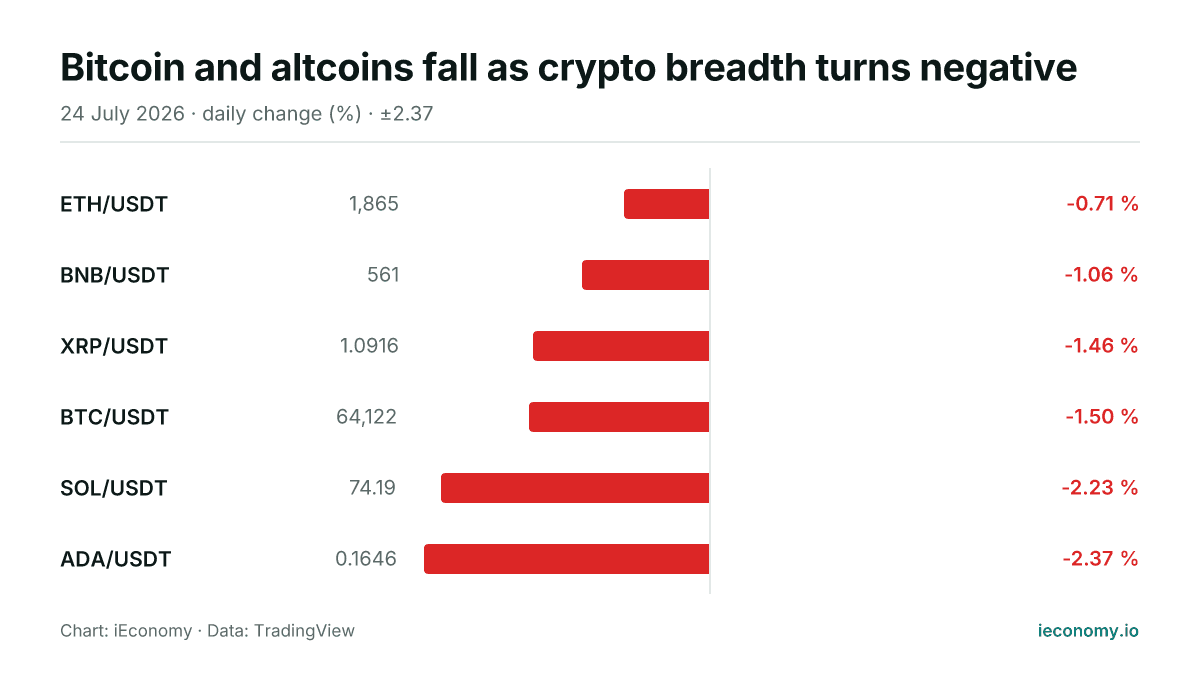
Bitcoin and altcoins fall as crypto breadth turns negative
All six tracked crypto assets were lower or flat on Friday, with bitcoin and ether retreating alongside the larger altcoins. The moves were modest in absolute terms but broad-based across the group.
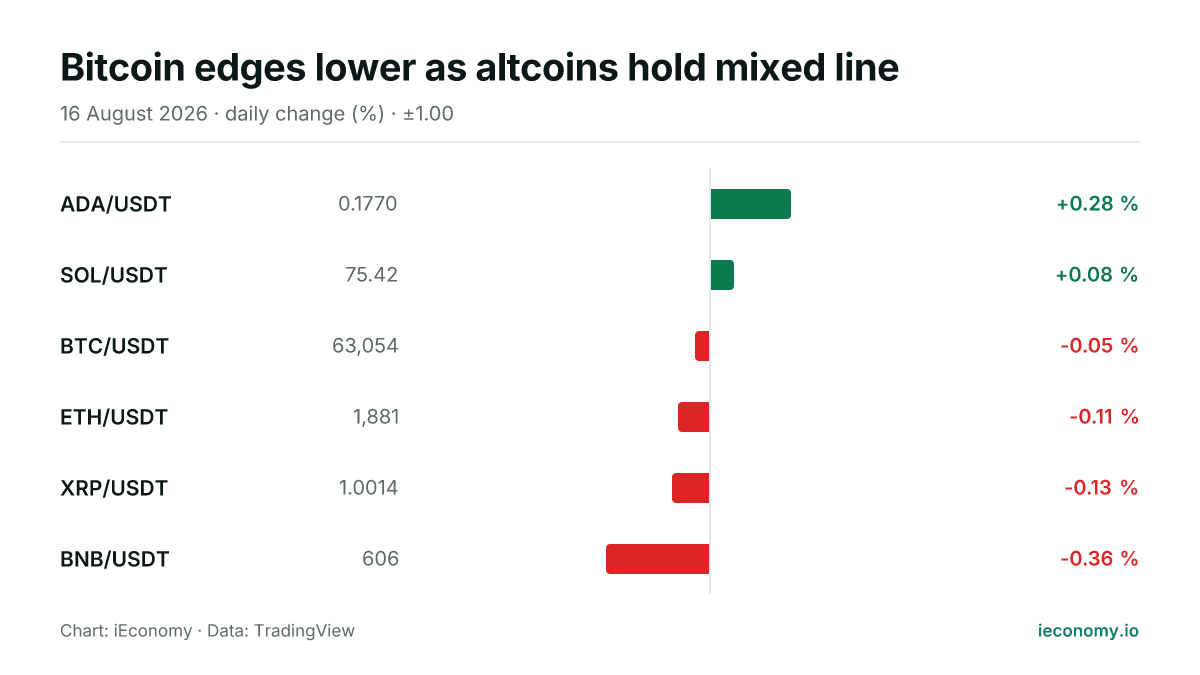
Bitcoin edges lower as altcoins hold mixed line
Bitcoin and ether slipped slightly on Sunday as two of six tracked tokens rose, leaving large-cap crypto broadly range-bound with only modest day-to-day dispersion.
Bitcoin ETFs end outflow streak with $32M inflow
US spot Bitcoin funds drew fresh money on Wednesday even as the token briefly slipped below $64,000, while Ether-linked ETFs posted net redemptions.