Oil heads for weekly loss as Hormuz supply outlook improves
Oil prices were subdued on Friday and headed for a weekly loss as signs of more crude moving through the Strait of Hormuz eased supply fears, even as diplomacy remained uncertain.

Oil prices were lower on Friday and were set for a weekly decline as traders weighed signs that more crude could move through the Strait of Hormuz. The move came even though tensions in the wider region remained high. Brent and U.S. crude both slipped in early trading, trimming the gains built up over the previous two weeks.
Hormuz flow prospects ease supply worries
Brent crude futures edged down to $88.49 a barrel, while West Texas Intermediate fell 0.2% to $83.40. The market reaction followed reports that additional oil was flowing through the Strait of Hormuz, a route that carries a large share of global crude shipments. That prospect reduced some of the concern that the Middle East conflict could severely disrupt supply.
Expectations had also risen that talks between Iran and Qatar might help keep the waterway open and limit any further interruption to exports. At the same time, the White House said the United States was not in talks with Iran, underlining how fragmented the diplomatic backdrop remains. Iran's military said it had reached a revenue-sharing deal with Oman over the strategic passage, though Tehran also said the strait could not be opened because of ceasefire breaches by the U.S. and Israel.
Geopolitical risks remain a floor under prices
Even with softer oil prices, broader geopolitical risk has not disappeared from the market. Moscow warned it could hit British military targets inside and outside Ukraine in response to U.K. backing for Kyiv. Those comments added another layer of uncertainty to an already tense global backdrop.
U.S. President Donald Trump said he did not believe Russian President Vladimir Putin would attack a NATO member. He also dismissed reports that Washington had warned Moscow against possible action in Europe. For oil traders, the result is a market pulled between easing supply concerns in the Gulf and renewed security risks elsewhere.
This article is not investment advice and recommends no asset, level or direction; a single session's move is not evidence of a trend. For background see Markets, Bear Market, BIST 100, and for terms the finance glossary.
Frequently asked questions
Why were oil prices weaker on Friday?
Prices were pressured by signs that more crude may be moving through the Strait of Hormuz, which eased fears of a near-term supply shock.
Which benchmarks moved lower?
Brent crude futures slipped to $88.49 a barrel, while West Texas Intermediate fell 0.2% to $83.40 a barrel.
What other risks were affecting the market?
The market was also watching diplomatic uncertainty around Iran and Qatar, as well as fresh geopolitical tensions involving Russia, the U.K. and NATO.
Sources
Related News
Oil Extends Gains as Iran Tensions Lift Prices
Oil rose for a fifth straight session as stalled U.S.-Iran talks and sharper rhetoric from Donald Trump stoked supply fears in West Asia, pushing Brent and WTI to multi-week highs.

Crude Oil Slides on Strait of Hormuz Transit Deal
Oil prices edged lower after reports that Iran and Oman are nearing a temporary shipping arrangement through the Strait of Hormuz, easing some immediate supply concerns.
Crude Oil Falls as U.S. Pressures Iran Economically
Oil prices dropped after Washington stepped up economic pressure on Iran instead of military action, easing fears of a wider Gulf conflict and lifting some supply anxiety.

Crude Oil Jumps as Middle East Risks Flare
Oil prices rebounded sharply after intraday swings, with supply concerns amplified by fresh Middle East developments and renewed focus on the Strait of Hormuz.
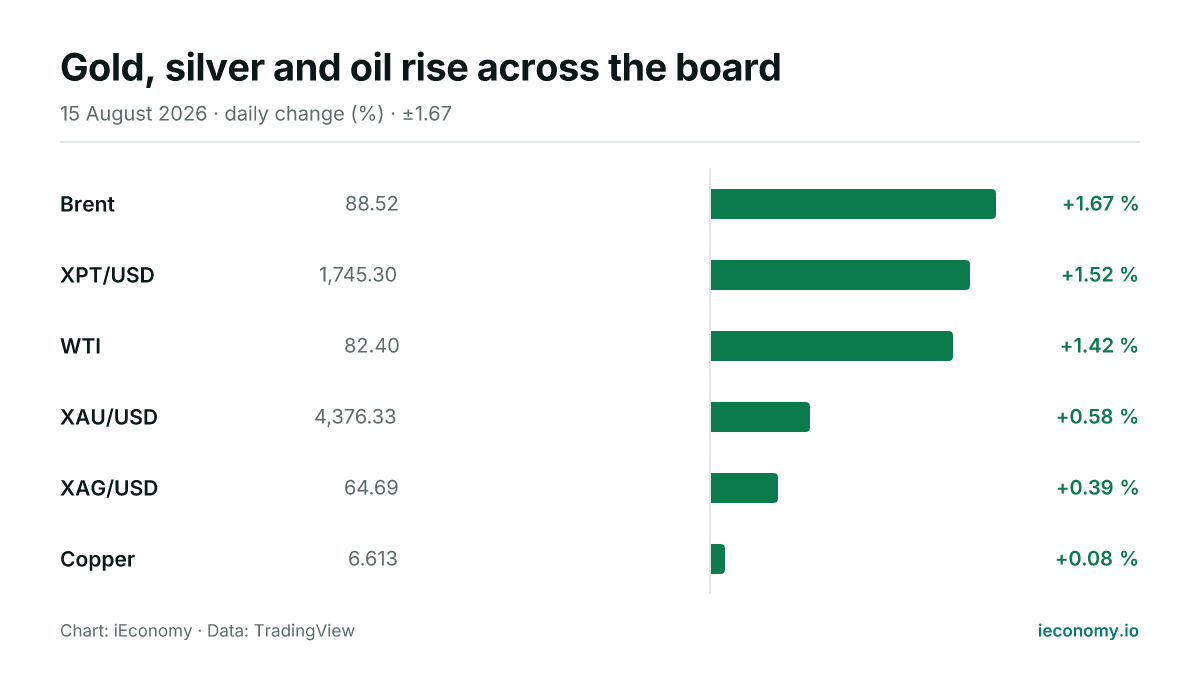
Gold, silver and oil rise across the board
All six tracked commodities moved higher on Saturday, led by Brent and platinum-group metals, while gold and silver also advanced. The day’s gains were broad-based, but the moves remain a snapshot rather than a signal on direction.
Crude Oil Rallies as Hormuz Reopening Stalls
Oil prices climbed as the U.S. and Iran remained at odds over compensation demands tied to recent war damage, clouding hopes for a quick reopening of the Strait of Hormuz.