Sugar outpaces stocks as supply fears lift futures
Sugar prices jumped 21.5% in August, lifting 2026 gains above the S&P 500 as weather disruptions, weaker crop outlooks and trade policy pressures tightened supply expectations.

Sugar has emerged as one of this year’s stronger commodity performers, outpacing the broad U.S. stock market as traders reassess global supply. The rally accelerated in August, when prices climbed 21.5%, the sharpest monthly rise since October 2010. That move left sugar futures up about 20% for 2026, ahead of the S&P 500’s nearly 13% gain.
Weather shocks and crop warnings
The latest surge reflects mounting concern that production will not keep up with demand. The U.N. Food and Agriculture Organization said the advance was driven by expectations of weaker sugar beet yields in the European Union, worries about El Niño affecting output in key Asian producers, lower sugar production in Brazil and India’s decision to allow duty-free raw sugar imports. Those factors have all pushed traders to price in a tighter global balance.
Damage to Europe’s sugar beet crop during a summer heat wave has been one of the most immediate catalysts, said William Osnato, director of commodity data research and analysis at Barchart. Sugar beet fields are vulnerable because they are grown in the same season and regions as other major crops, making heat stress especially disruptive. As a result, several market groups have cut output forecasts in recent weeks.
What the market is pricing now
The price move is not just about one bad harvest; it is about a broader change in expectations for the world supply chain. When production estimates fall across multiple regions at once, futures markets tend to respond quickly because inventory assumptions weaken. That has been visible in the latest reports from both international agencies and private analysts, which have pointed to higher deficit estimates or lower crop projections.
The European Commission’s newest sugar balance sheet illustrates the shift. It now estimates EU production will fall 19% in the 2026/27 marketing year to 13.4 million metric tons, down from 16.6 million tons in 2025/26. That scale of decline matters because Europe is a major participant in the global sugar trade and changes there can influence pricing well beyond the region.
The broader market backdrop has also helped keep attention on sugar. While equities have delivered solid returns this year, the commodity has moved faster, reflecting a different set of drivers centered on weather, agriculture and trade flows. The U.N. food agency said its August food price index rose as well, with sugar among the main contributors to the increase.
For investors and food producers, the key issue now is whether the current supply concerns ease or deepen over the coming months. A rally built on crop damage, weather risk and lower output estimates can persist if those pressures continue, but it can also reverse if harvest conditions improve. For now, sugar’s performance shows how quickly agricultural markets can reprice when supply expectations change.
This article is not investment advice and recommends no asset, level or direction; a single session's move is not evidence of a trend. For background see Stocks, Bear Market, BIST 100, and for terms the finance glossary.
Frequently asked questions
Why did sugar prices rise so sharply in August?
Prices jumped because traders became more concerned about global supply after weather damage, lower production estimates and other disruptions hit several major producing regions.
How does sugar compare with the stock market this year?
Sugar futures are up about 20% in 2026, while the S&P 500 is up nearly 13% over the same period.
What production outlook is Europe facing?
The European Commission expects EU sugar production to fall to 13.4 million metric tons in 2026/27 from 16.6 million tons in 2025/26.
Sources
Related News
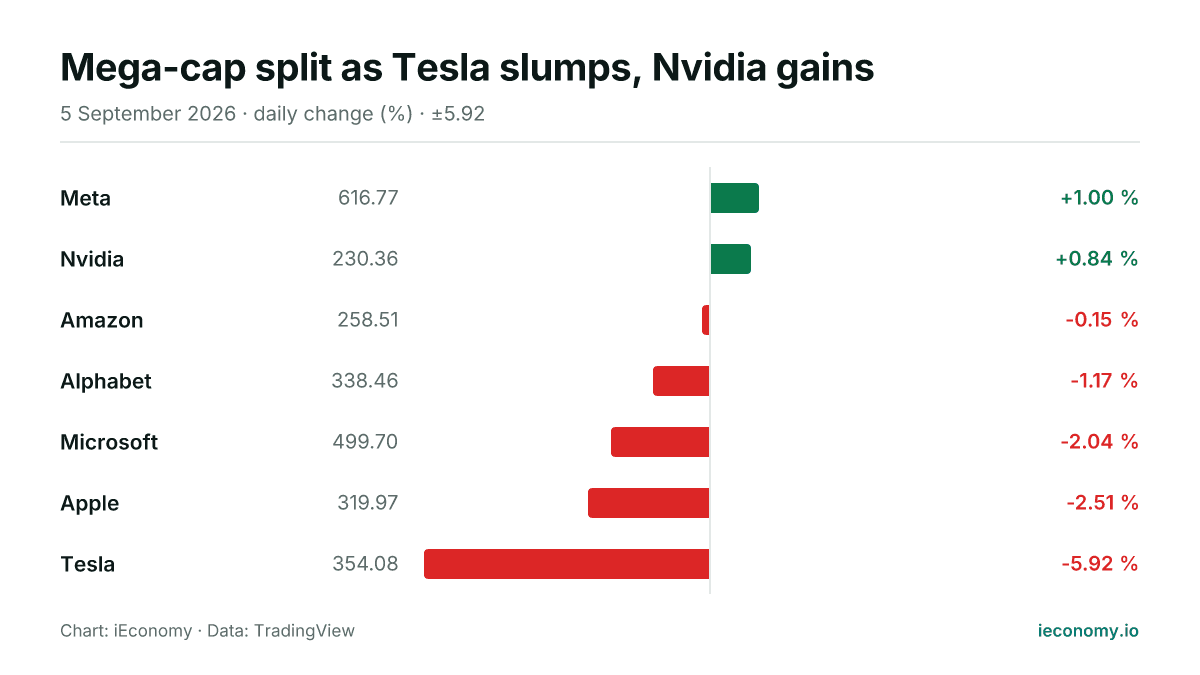
Mega-cap split as Tesla slumps, Nvidia gains
US megacaps finished the day mixed on Saturday, with Nvidia and Meta higher while Apple, Microsoft, Alphabet and Tesla fell. The spread shows how even the largest names can diverge sharply in one session.
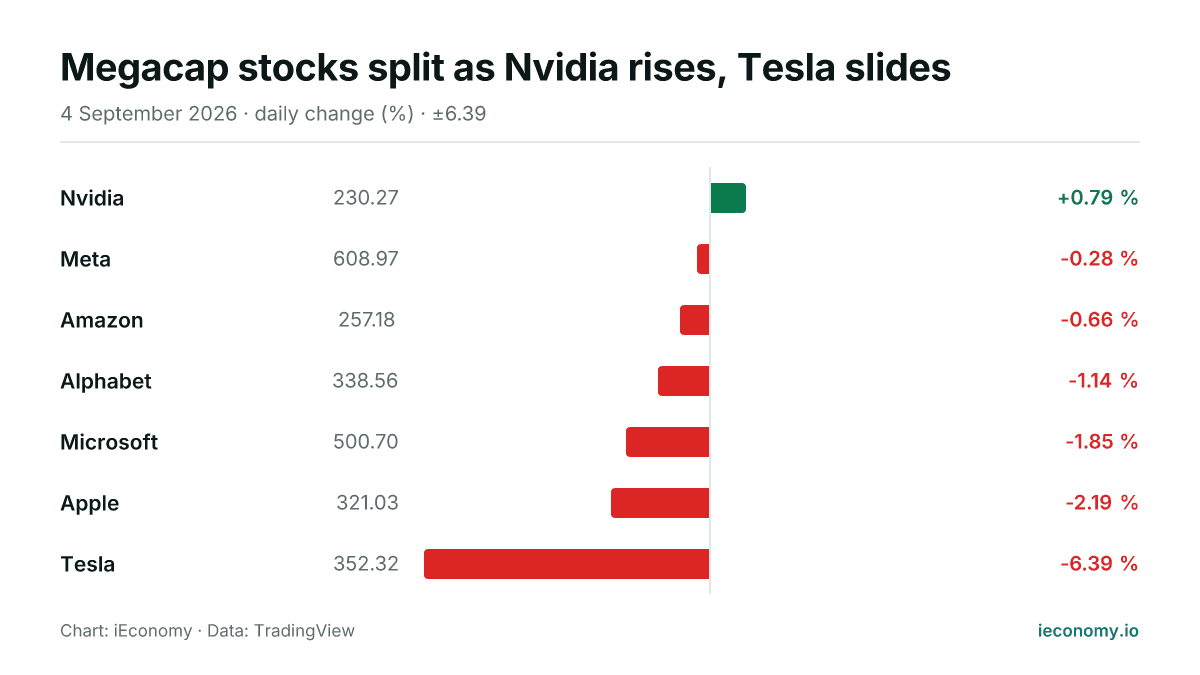
Megacap stocks split as Nvidia rises, Tesla slides
US megacaps were mixed on Friday, with Nvidia edging higher while most of the group slipped. Tesla led the declines and Apple, Microsoft and Alphabet all fell, leaving breadth weak across the cohort.
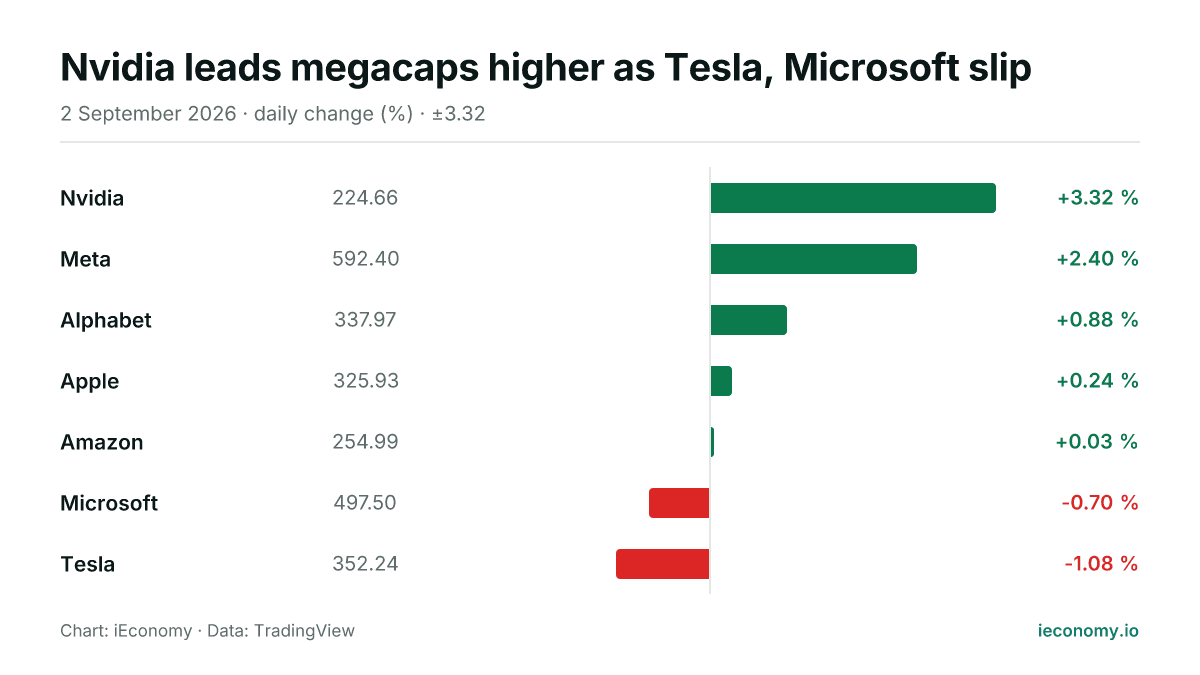
Nvidia leads megacaps higher as Tesla, Microsoft slip
US megacaps were mostly firmer on Wednesday, with Nvidia out front and Meta also gaining. Microsoft and Tesla lagged, while Apple and Amazon were little changed, leaving the group mixed but broadly constructive.
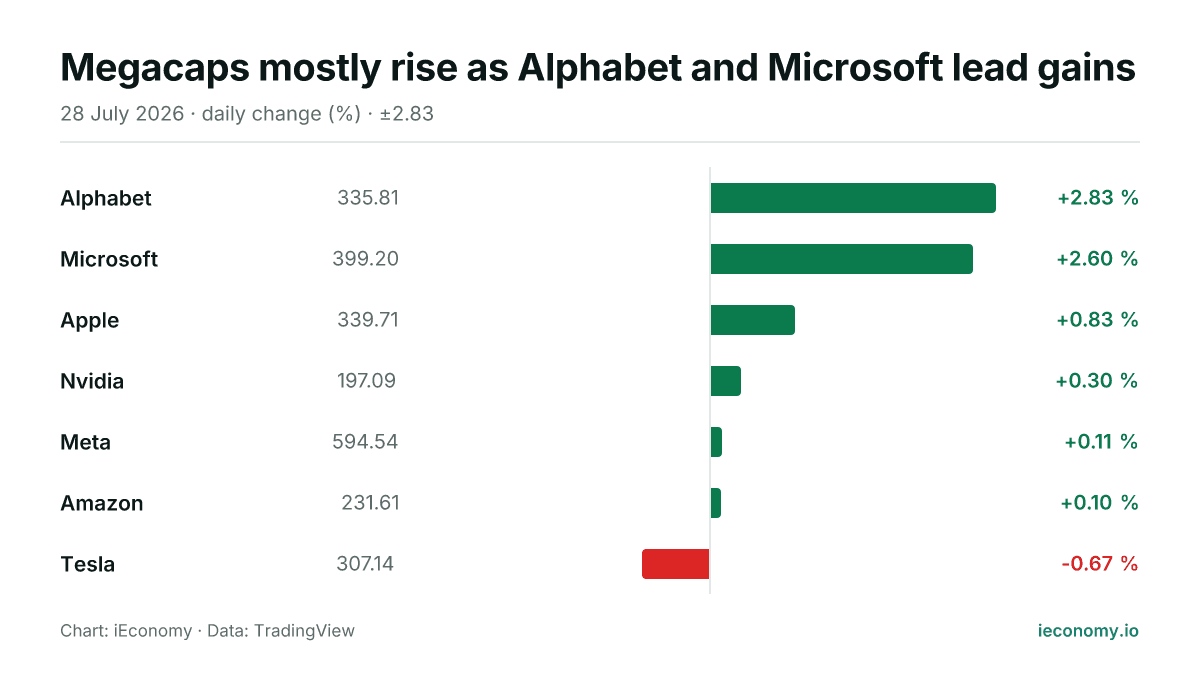
Megacaps mostly rise as Alphabet and Microsoft lead gains
US megacaps were broadly firmer on Tuesday, with six of seven names higher and Alphabet and Microsoft posting the biggest advances. Tesla was the only decliner, while the rest of the group moved in relatively modest ranges.
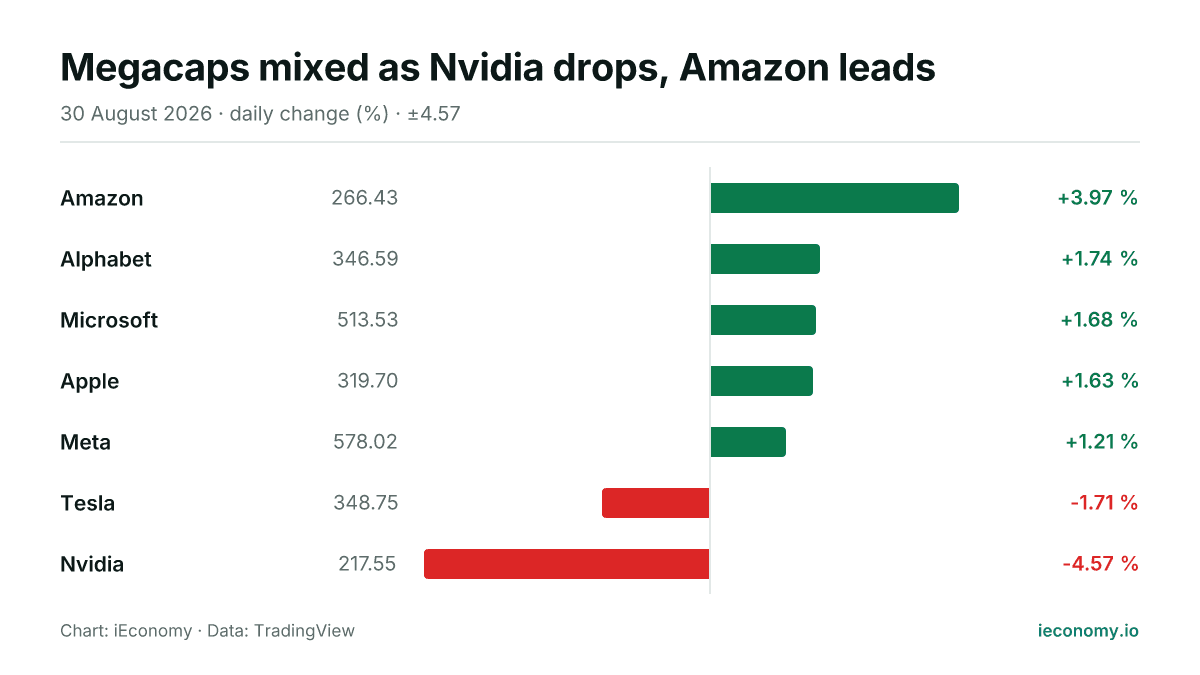
Megacaps mixed as Nvidia drops, Amazon leads
Five of seven leading US megacaps rose on Sunday, but the group was split by a sharp Nvidia decline and a smaller fall in Tesla. The moves show how index-heavy names can pull in different directions over a single session.
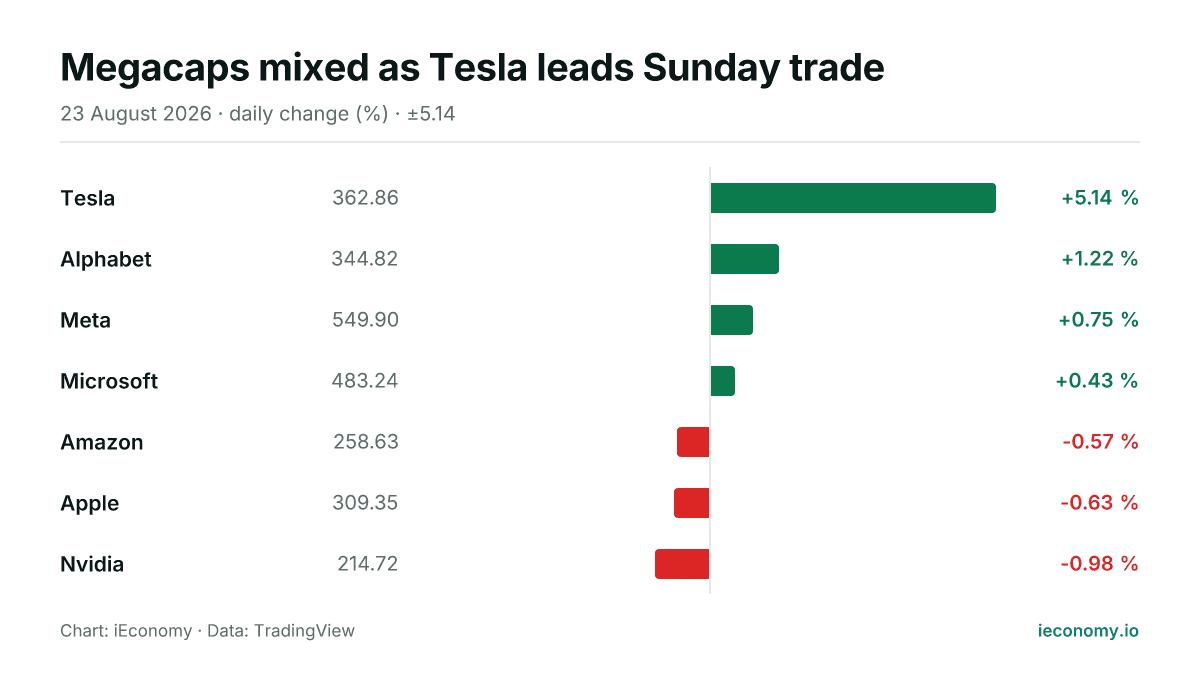
Megacaps mixed as Tesla leads Sunday trade
US megacaps were mixed on Sunday, with four of seven names higher and three lower or flat. Tesla led gains while Nvidia, Apple and Amazon slipped modestly, underscoring how single-day moves can diverge inside the group.