Tech backlash intensifies as AI fears meet social media anger
Americans are growing more skeptical of big tech as AI anxiety, data center opposition and anger over social media harms reshape the debate around Silicon Valley.

Americans are turning more wary of the technology industry just as artificial intelligence expands and social media companies face fresh scrutiny. CNBC reported that the backlash is building around two connected worries: the spread of AI and the lasting social costs of the last generation of apps. That unease is now becoming a broader political and market issue.
Public concern has sharpened as AI firms scale quickly and data centers spread into more communities. Many people now link the technology with job displacement and with large industrial projects that can bring noise, power demand and land-use disputes to their neighborhoods. At the same time, the biggest tech companies continue to grow larger and more influential, which is feeding the sense that the sector is moving faster than public comfort with it.
AI anxiety spreads beyond Silicon Valley
Sarah Myers West of the AI Now Institute said the public is worried about the economic and social effects if AI develops as its backers expect. Her concern reflects a wider fear that the technology could alter work, reduce personal control and deepen inequality. That anxiety has moved well beyond specialist debates and into everyday consumer attitudes.
A recent Pew Research Center report found that more than half of Americans are now more concerned than excited about AI in daily life. That compares with 37% in 2021, showing a notable shift in sentiment over a short period. Separate polling from earlier this year by the Searchlight Institute found that most voters believe social media has a negative effect on society.
Social media harms remain a live issue
The backlash is also tied to the legacy of social platforms that many users say became addictive and harmful. Meta this week agreed to a settlement that could total as much as $17 billion in a social media case, underscoring how expensive the reputational and legal fallout has become for the industry. The scale of that agreement has kept the debate over online harms in the headlines.
The timing matters because the wider economy is already under strain from high inflation and weak sentiment. Consumer confidence recently fell to a seven-month low, leaving households more sensitive to new risks and less willing to embrace another disruptive technology wave. Against that backdrop, the perception of tech firms as richer, larger and more powerful is adding to public suspicion.
For investors, the shift does not change the size or profitability of the sector overnight, but it does raise the political and regulatory stakes around AI buildout and platform oversight. Data center expansion, content moderation, data use and workplace disruption are all likely to remain contentious. The tech narrative has moved from innovation at any cost to a more skeptical debate over who bears the consequences.
This article is not investment advice and recommends no asset, level or direction; a single session's move is not evidence of a trend. For background see Stocks, Bear Market, BIST 100, and for terms the finance glossary.
Frequently asked questions
Why is tech backlash intensifying now?
Because concerns about AI, data centers and social media harms are rising at the same time, while inflation and weak confidence are making people more skeptical of big companies.
What does the Pew Research Center say about AI sentiment?
It found that more than half of Americans are more concerned than excited about AI in daily life, up from 37% in 2021.
Why is Meta part of the story?
Meta agreed to a settlement that could reach $17 billion in a social media case, which has renewed attention on the costs of social platform harms.
Sources
Related News
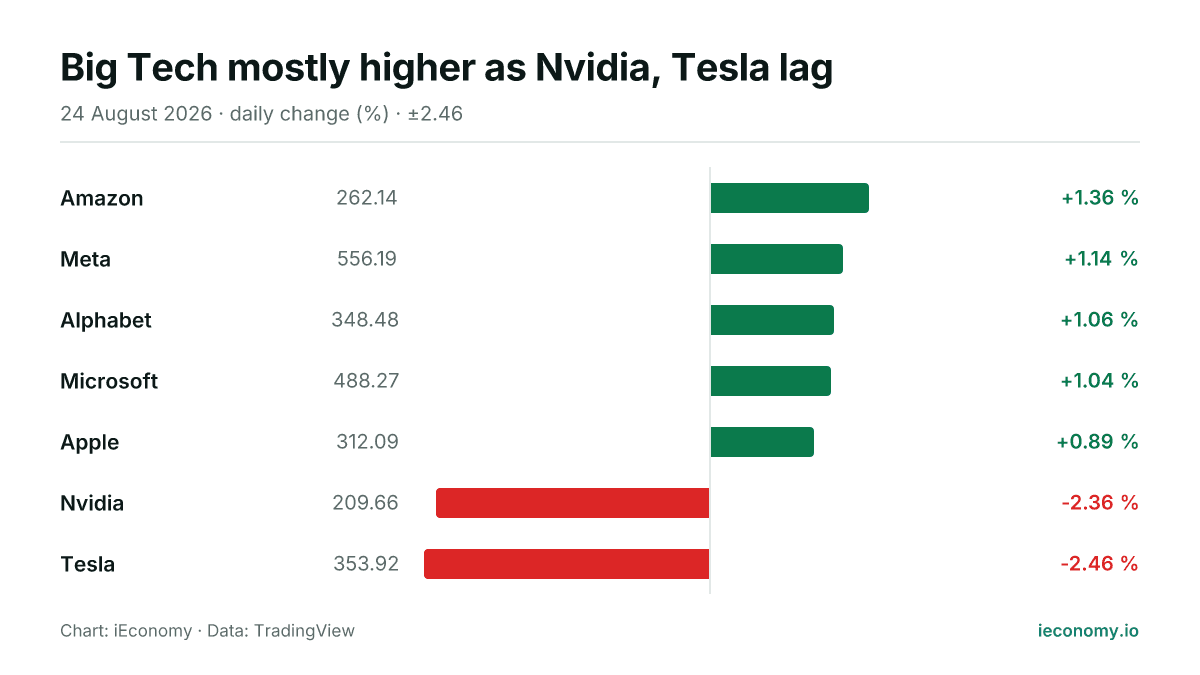
Big Tech mostly higher as Nvidia, Tesla lag
Most of the US megacaps traded higher on Monday, with Apple, Microsoft, Alphabet, Meta and Amazon in the green. Nvidia and Tesla moved lower, leaving the group mixed but still broadly constructive.
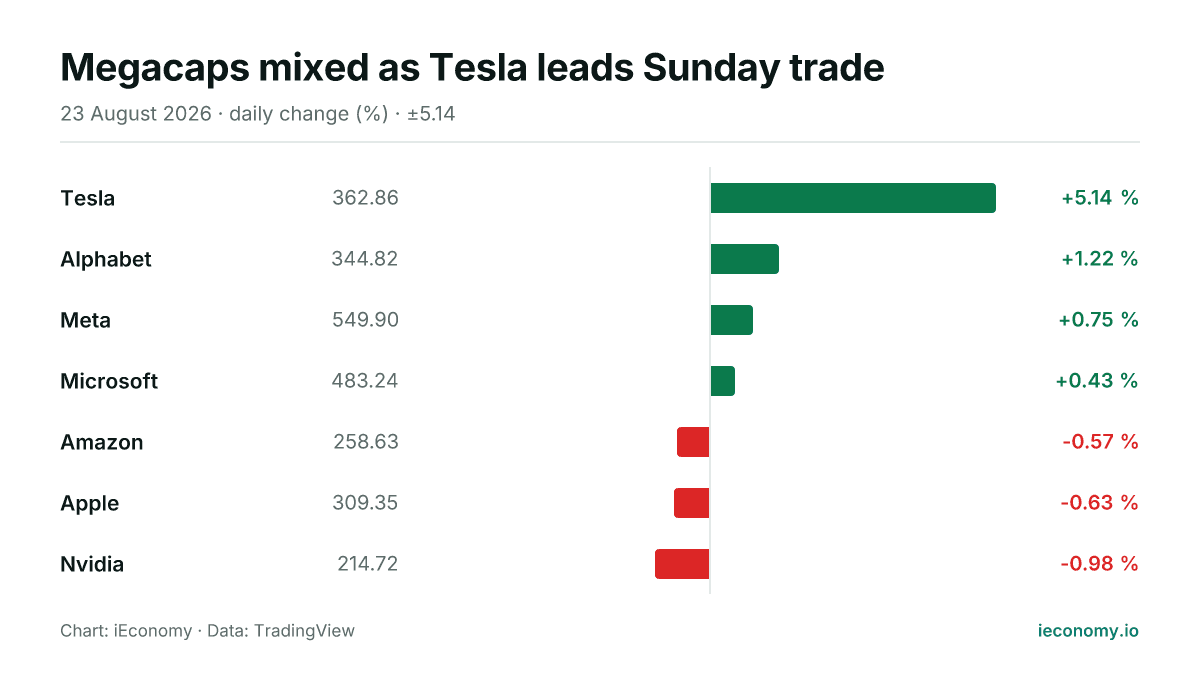
Megacaps mixed as Tesla leads Sunday trade
US megacaps were mixed on Sunday, with four of seven names higher and three lower or flat. Tesla led gains while Nvidia, Apple and Amazon slipped modestly, underscoring how single-day moves can diverge inside the group.
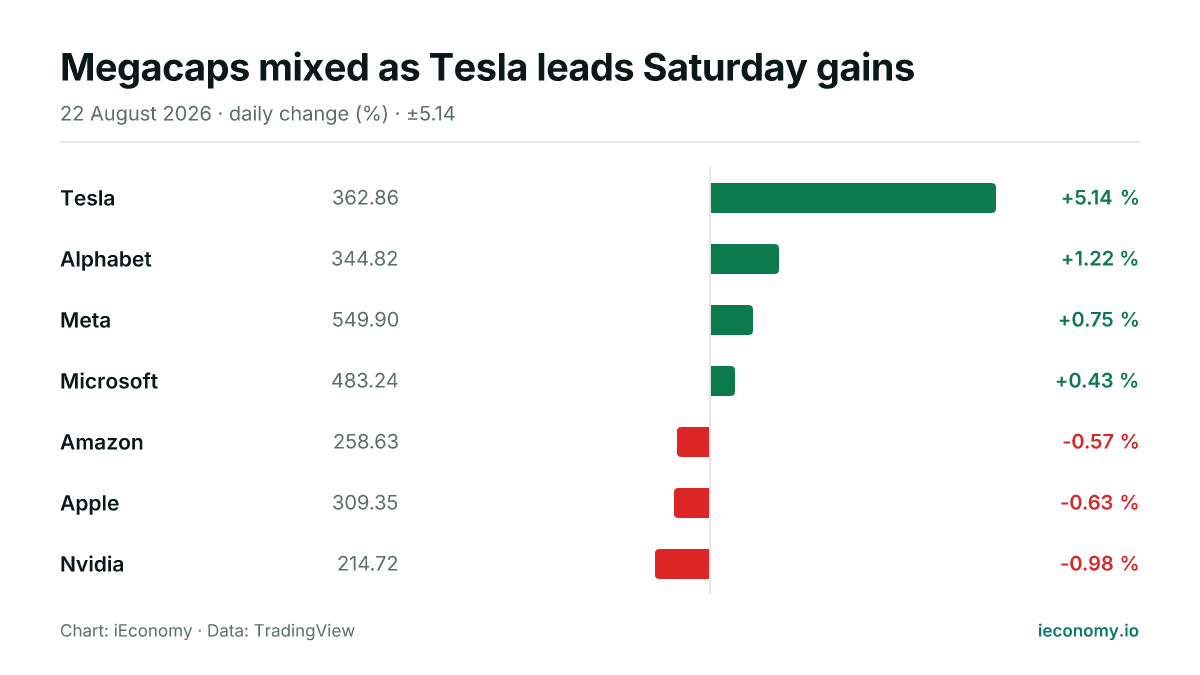
Megacaps mixed as Tesla leads Saturday gains
US megacaps were mixed on Saturday, with four of seven higher and Tesla the strongest mover. Apple, Amazon and Nvidia slipped, while Microsoft and Meta posted smaller gains.
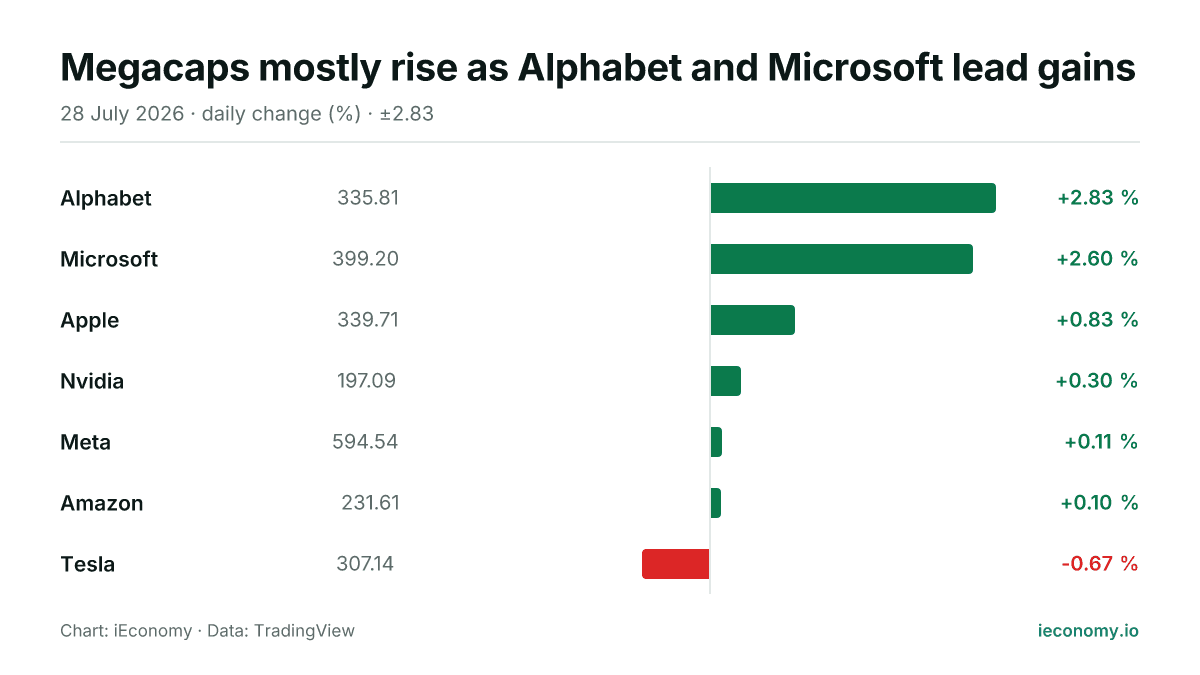
Megacaps mostly rise as Alphabet and Microsoft lead gains
US megacaps were broadly firmer on Tuesday, with six of seven names higher and Alphabet and Microsoft posting the biggest advances. Tesla was the only decliner, while the rest of the group moved in relatively modest ranges.
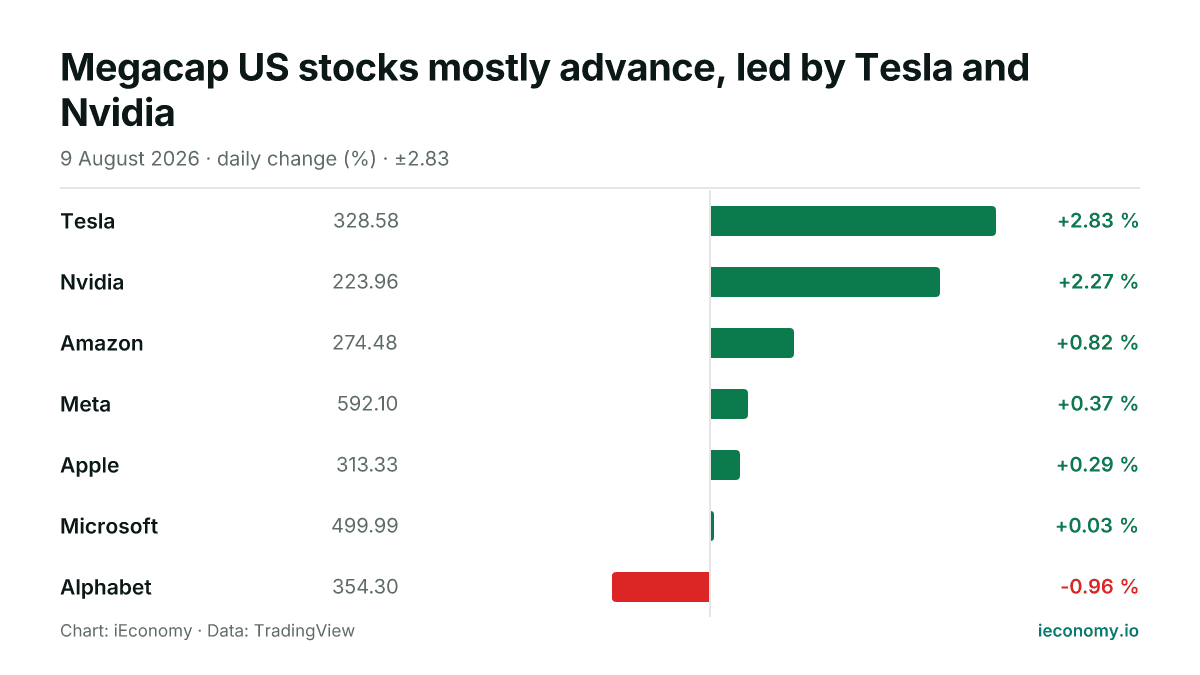
Megacap US stocks mostly advance, led by Tesla and Nvidia
Seven of the eight megacaps tracked were higher on Sunday, with Tesla and Nvidia setting the pace while Alphabet was the only name in the red. The moves were modest in most cases, pointing to broad resilience rather than a sweeping shift in sentiment.
Kraken opens US stock trading to EEA customers
Kraken has added more than 7,000 US-listed stocks for eligible European Economic Area users, combining conventional shares with tokenized equities on one platform.