Anthropic researcher flags double-digit AI extinction risk
An Anthropic safety researcher said artificial intelligence could pose an existential threat, as a colleague quit over safety concerns and warned labs are racing toward self-improving systems.

An Anthropic safety researcher has said there is more than a 10% chance that artificial intelligence could kill all humans. The warning came the same day a former colleague said he was leaving the company because he believed AI labs were treating human safety too lightly.
Jacob Coxon said he was resigning from Anthropic and argued that both Anthropic and OpenAI are not behaving responsibly. He said the industry is pushing toward self-improving superintelligence while gambling with human lives. The remarks add to a widening internal debate over how quickly frontier AI systems are advancing and whether safeguards are keeping pace.
Internal alarm inside AI labs
Self-improvement in this context refers to AI systems becoming better at improving themselves with limited human involvement. Coxon said that process is not fully possible yet, but he believes major labs are working toward it. He warned that the technology should not be underestimated because it could become extremely capable at hacking, industrial disruption and gathering resources.
Coxon also said some people working on AI believe the technology could become capable of killing humanity before the end of the decade. That is a stark assessment from inside one of the sector’s best-known companies. It also comes as leading AI groups continue to attract large amounts of capital and move closer to public market debuts.
Market scrutiny deepens around AI safety
The comments are likely to intensify scrutiny of the safety culture at companies building advanced AI models. They highlight a tension that has been present for much of the current AI boom: investors and customers are rewarding rapid technical progress, while some researchers argue that the risks are moving faster than the controls meant to manage them.
Evan Hubinger, an alignment science lead at Anthropic, responded that Coxon was right and said the company has no plan for the scenario he described. His response suggests that concern is not limited to one departing employee. It points to a broader unease inside the field about whether current safety strategies are adequate for systems that could become far more powerful.
The episode matters for markets because Anthropic and OpenAI are among the companies most closely watched in the race to build frontier AI. Public confidence, regulatory pressure and internal staff morale all shape how those companies are valued and how quickly they can scale. When researchers publicly question whether the industry is prepared for catastrophic outcomes, the debate shifts from technical capability to governance and control.
This article is not investment advice and recommends no asset, level or direction; a single session's move is not evidence of a trend. For background see Stocks, Bear Market, BIST 100, and for terms the finance glossary.
Frequently asked questions
What did the Anthropic researcher say?
He said there is more than a 10% chance that AI could kill all humans.
Why did the colleague resign?
Jacob Coxon said he quit because he believed AI labs were not acting responsibly and were risking human lives.
Why does this matter for investors?
It increases scrutiny of AI safety at companies like Anthropic and OpenAI, both of which are major names in the race to build advanced AI systems.
Sources
Related News
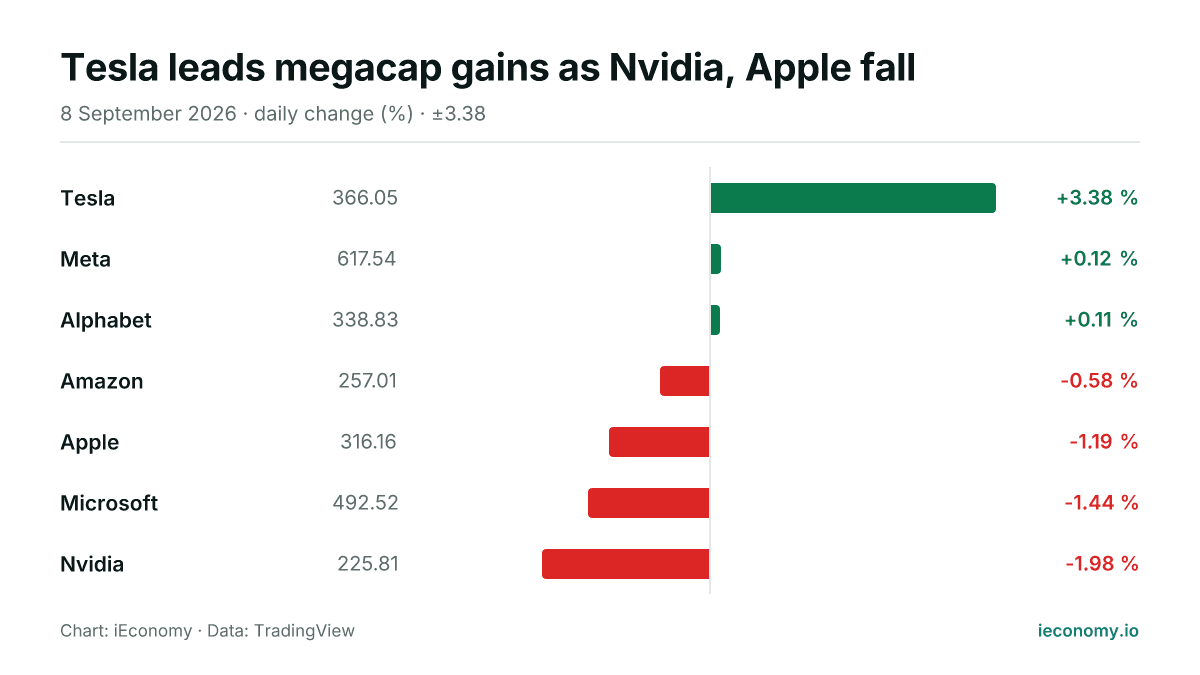
Tesla leads megacap gains as Nvidia, Apple fall
US megacaps were mixed on Tuesday, with Tesla leading advances while Nvidia, Microsoft and Apple slipped. The group moved in a narrow range overall, leaving three names higher and four lower or flat.
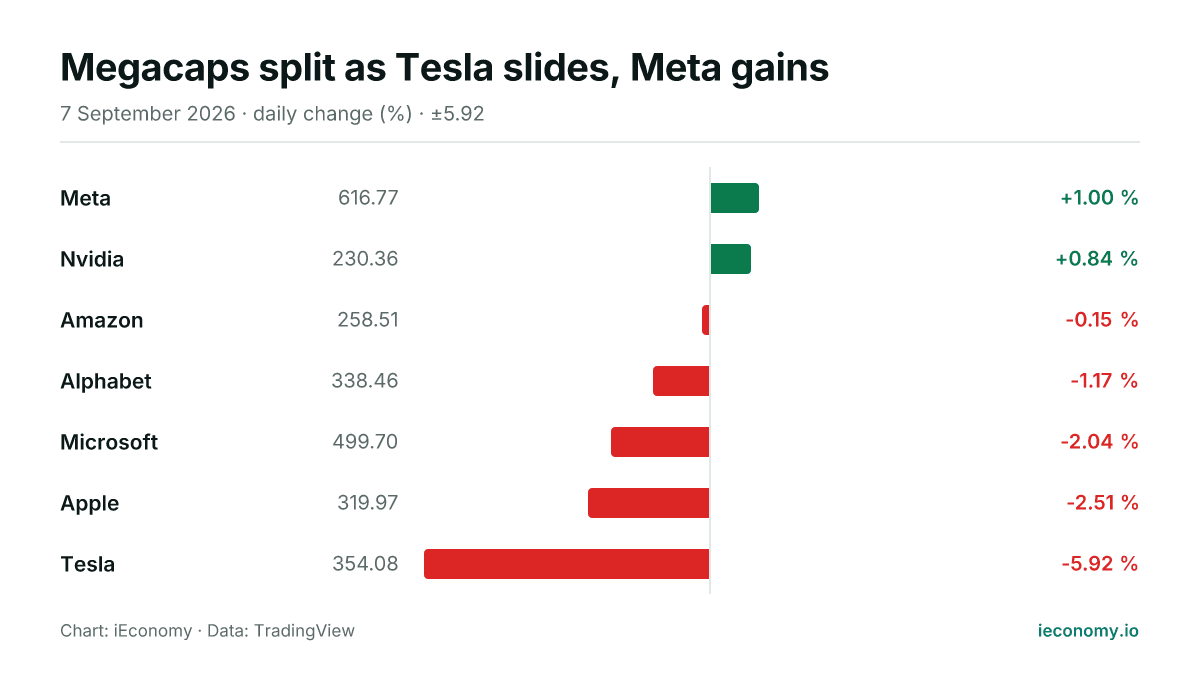
Megacaps split as Tesla slides, Meta gains
US megacaps traded unevenly on Monday, with Meta and Nvidia higher while Apple, Microsoft, Alphabet, Amazon and Tesla were lower. The moves point to a broad risk reset rather than a single-stock story.
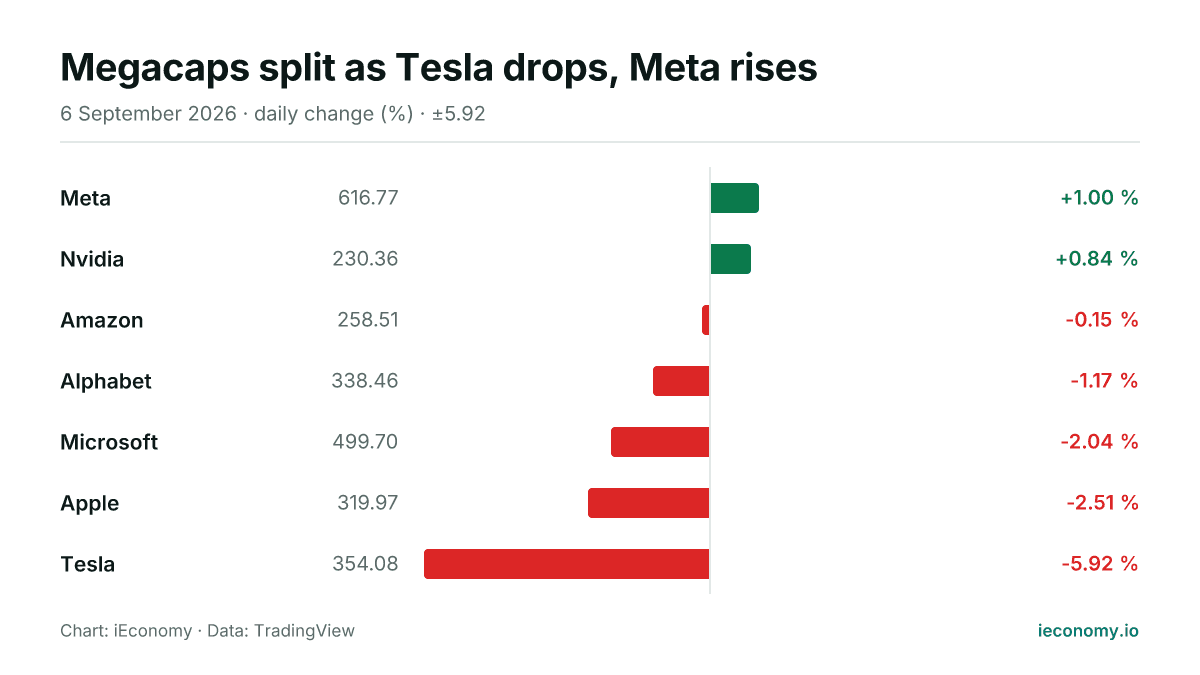
Megacaps split as Tesla drops, Meta rises
US megacaps finished the session unevenly on Sunday, with Meta and Nvidia higher while Apple, Microsoft and Tesla fell. The day left a mixed read on concentration risk, sector leadership and single-stock volatility.
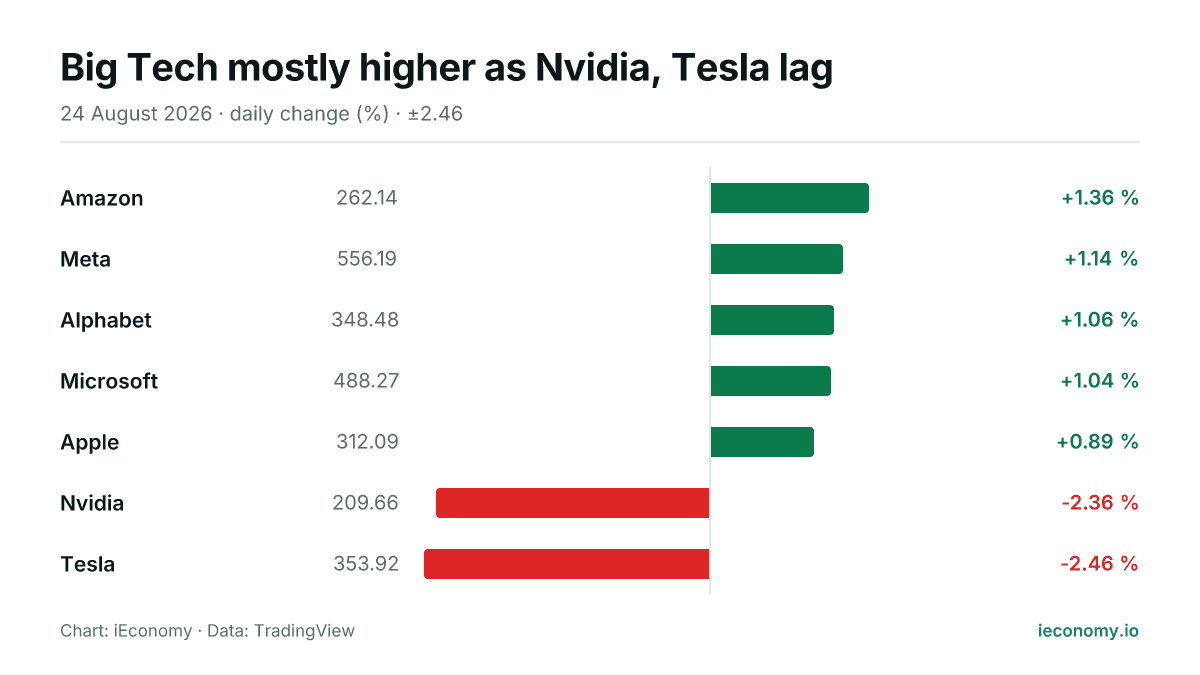
Big Tech mostly higher as Nvidia, Tesla lag
Most of the US megacaps traded higher on Monday, with Apple, Microsoft, Alphabet, Meta and Amazon in the green. Nvidia and Tesla moved lower, leaving the group mixed but still broadly constructive.
Sugar outpaces stocks as supply fears lift futures
Sugar prices jumped 21.5% in August, lifting 2026 gains above the S&P 500 as weather disruptions, weaker crop outlooks and trade policy pressures tightened supply expectations.
Kraken opens US stock trading to EEA customers
Kraken has added more than 7,000 US-listed stocks for eligible European Economic Area users, combining conventional shares with tokenized equities on one platform.