Canada tariffs hit $27.6 billion in U.S. goods
Canada has imposed fresh retaliatory tariffs of 15% to 50% on $27.6 billion of U.S. products, doubling duties on steel and aluminum as trade talks with Washington break down.

King of Hearts / Wikimedia Commons (CC BY-SA 4.0)
Canada has activated a new round of retaliatory tariffs on a broad list of American imports, intensifying a trade dispute that has already disrupted one of the world’s largest bilateral commercial relationships. The measures apply to $27.6 billion worth of U.S. goods and took effect on Tuesday after negotiations collapsed last month.
Higher duties on metals and consumer goods
The new tariffs span a wide range of products, from dairy and farm equipment to paper, household appliances and electronics. Canadian duties on U.S. steel, aluminum and iron products have been raised to 50%, while furniture and clothing are also facing the highest rate in the package. The overall tariff range runs from 15% to 50%.
Ottawa described the action as a dollar-for-dollar response to U.S. levies on Canadian goods. The finance department said the goal is to shield Canadian workers, producers and manufacturers by making domestic suppliers more competitive against imported American products. Existing counter-tariffs, including a 25% levy on autos, remain in force.
Talks fail as pressure rises
The escalation follows the breakdown of trade talks at the end of August, with both sides blaming each other for the failure to reach an agreement. Officials also publicly disagreed over which issues blocked progress, leaving little sign that the dispute would ease quickly. The latest move comes against a backdrop of increasingly sharp language between Washington and Ottawa.
On Monday, U.S. President Donald Trump called for a boycott of Bombardier, the Canadian aircraft maker, posting on Truth Social: "NO MORE SELLING BOMBARDIER IN THE UNITED STATES!" The comment added to the strain in a relationship that has traditionally been anchored by deep cross-border commerce and integrated supply chains. The two countries trade heavily in sectors such as energy, vehicles, heavy machinery, aircraft, pharmaceuticals, jewelry, furniture, clothing and food and drink.
The scale of the trade flows helps explain why the dispute matters for markets on both sides of the border. The United States exported $333.6 billion of goods to Canada and imported $381.9 billion from its northern neighbor. With tariffs now covering more sectors and higher rates applied to key industrial goods, companies exposed to cross-border manufacturing and distribution face another round of uncertainty.
This article is not investment advice and recommends no asset, level or direction; a single session's move is not evidence of a trend. For background see Stocks, Bear Market, BIST 100, and for terms the finance glossary.
Frequently asked questions
What did Canada do on Tuesday?
Canada brought in retaliatory tariffs on $27.6 billion of U.S. goods, with rates ranging from 15% to 50%.
Which products face the steepest duties?
U.S. steel, aluminum and iron products now face 50% duties, and furniture and clothing are also at the top rate.
Are earlier Canadian counter-tariffs still in place?
Yes. Existing counter-tariffs, including a 25% levy on autos, remain in force.
Sources
Related News

Amazon cargo jet overran Miami runway, NTSB says
A cargo jet operating for Amazon ran off the runway at Miami International Airport, struck two vehicles and killed multiple people, as investigators recovered the flight recorders.
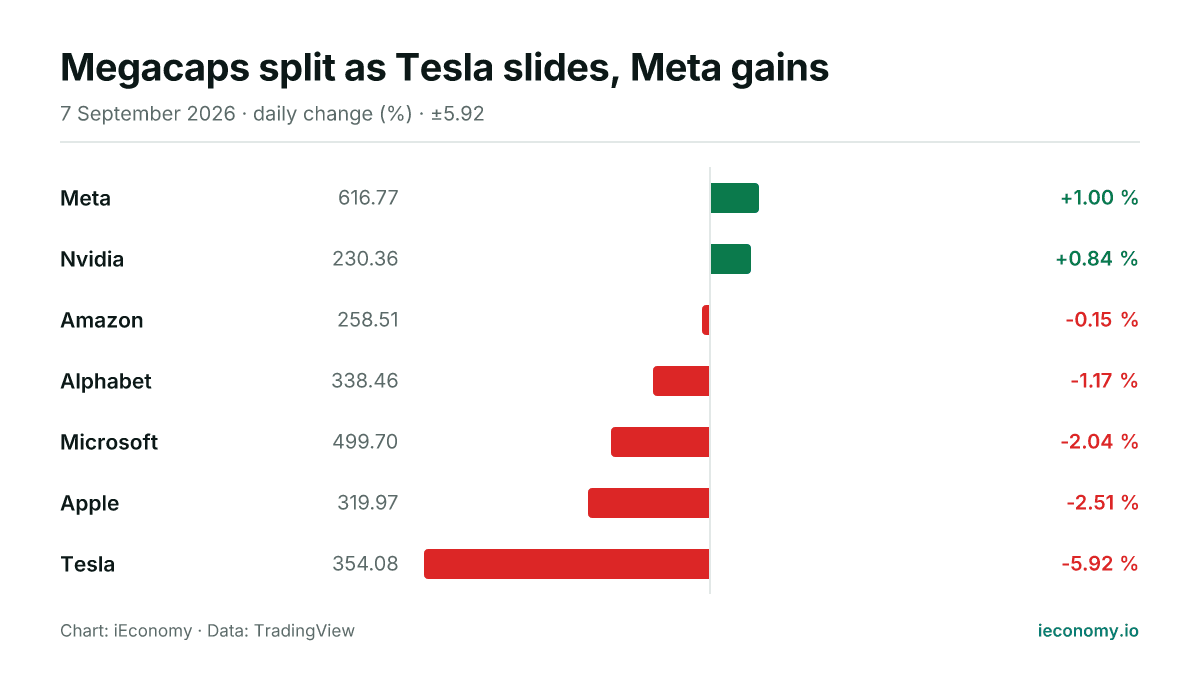
Megacaps split as Tesla slides, Meta gains
US megacaps traded unevenly on Monday, with Meta and Nvidia higher while Apple, Microsoft, Alphabet, Amazon and Tesla were lower. The moves point to a broad risk reset rather than a single-stock story.

Eight large US groups due to report over the next 14 days
Oracle, Adobe and Kroger are among eight large US companies scheduled to report between Sep 8 and Sep 17, with earnings releases clustered around mid-September.
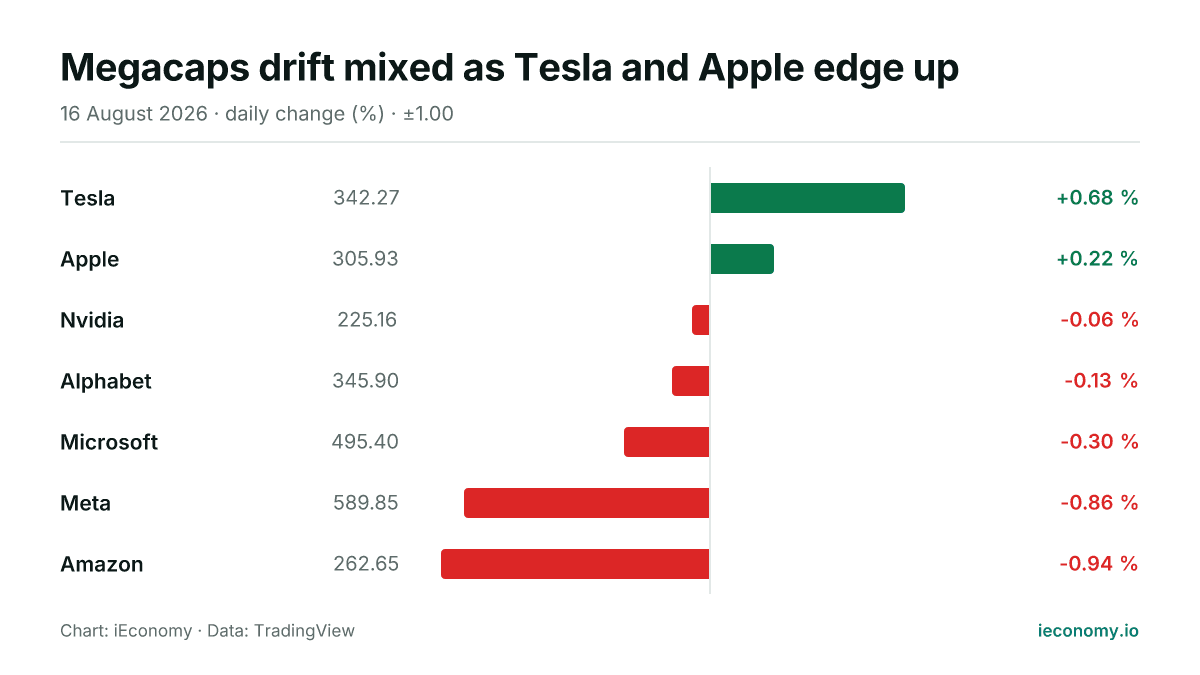
Megacaps drift mixed as Tesla and Apple edge up
Two of seven megacaps finished higher on Sunday, led by Tesla and Apple, while Meta and Amazon posted the steepest declines. The day’s moves were small, but the dispersion left the group broadly softer.
Automakers Post Mixed Results as EV Demand Cools, Hybrids Surge
Quarterly results diverged sharply between manufacturers leaning on hybrid lineups and those most exposed to slowing electric vehicle sales.
Coca-Cola tops estimates and lifts full-year outlook
Coca-Cola posted stronger-than-expected quarterly results as drink demand rose across all reporting regions, and the company raised its guidance for earnings and organic sales.