Crypto education gap pushes students to social media
An OKX survey shows 90% of US students want crypto classes, but a lack of formal courses makes social media their primary learning source.

Jorge Franganillo / Wikimedia Commons (CC BY 2.0)
A significant disconnect exists between student demand for cryptocurrency education and its availability in formal academic settings. A new survey commissioned by the crypto exchange OKX reveals that while an overwhelming majority of US college students want schools to teach blockchain and digital assets, most are forced to turn to social media for their primary education on the topic.
The poll, conducted this month, found that 90% of students and 87% of parents support teaching cryptocurrency and blockchain subjects at the college level. Notably, about 27% of students and 32% of parents believe such instruction should be mandatory, indicating a strong perceived need for structured, credible knowledge in a rapidly evolving financial sector.
Formal education lags behind demand
Despite this clear appetite, a separate review of the academic landscape shows a stark shortage of formal courses. A 2025 analysis of 533 US universities with accredited business schools found that only about 28% offered any blockchain-related courses. This supply gap leaves a vast majority of students without access to credentialed, curriculum-based learning on a subject they consider important for their future careers and financial literacy.
The consequence of this educational void is a heavy reliance on informal and often unvetted sources of information. According to the OKX survey findings, 33% of students identified social media or online influencers as their most important source for cryptocurrency information. This figure is nearly five times the number who cited schools, teachers, or professors as their primary resource.
Parents and students diverge on sources
While students gravitate toward social platforms, the survey indicates a different trend among parents. For this group, crypto platforms and trading apps were the leading source of information, cited by 21% of parent respondents. This divergence highlights a generational shift in how financial information is consumed and trusted, with younger demographics placing more faith in digital communities and content creators than traditional institutions or even the product providers themselves.
The survey, which polled 500 students and 500 parents through the platform Pollfish, underscores a critical moment for higher education. As blockchain technology becomes more integrated into global finance and business, institutions face increasing pressure to modernize their curricula. The current reliance on social media, while filling an immediate need, raises concerns about the quality, accuracy, and potential bias of the information shaping the next generation's understanding of digital assets.
This article is not investment advice and recommends no asset, level or direction; a single session's move is not evidence of a trend. For background see Crypto, Altcoin, Bitcoin, and for terms the finance glossary.
Frequently asked questions
What percentage of students want crypto classes?
The OKX survey found that 90% of US college students support teaching cryptocurrency and blockchain subjects in college.
How many US business schools offer blockchain courses?
A separate 2025 review found that only about 28% of accredited US business schools offered any blockchain-related courses.
Where do most students learn about crypto?
According to the survey, 33% of students said social media or influencers were their most important source of cryptocurrency information, a rate nearly five times higher than those who cited schools or professors.
Sources
Related News
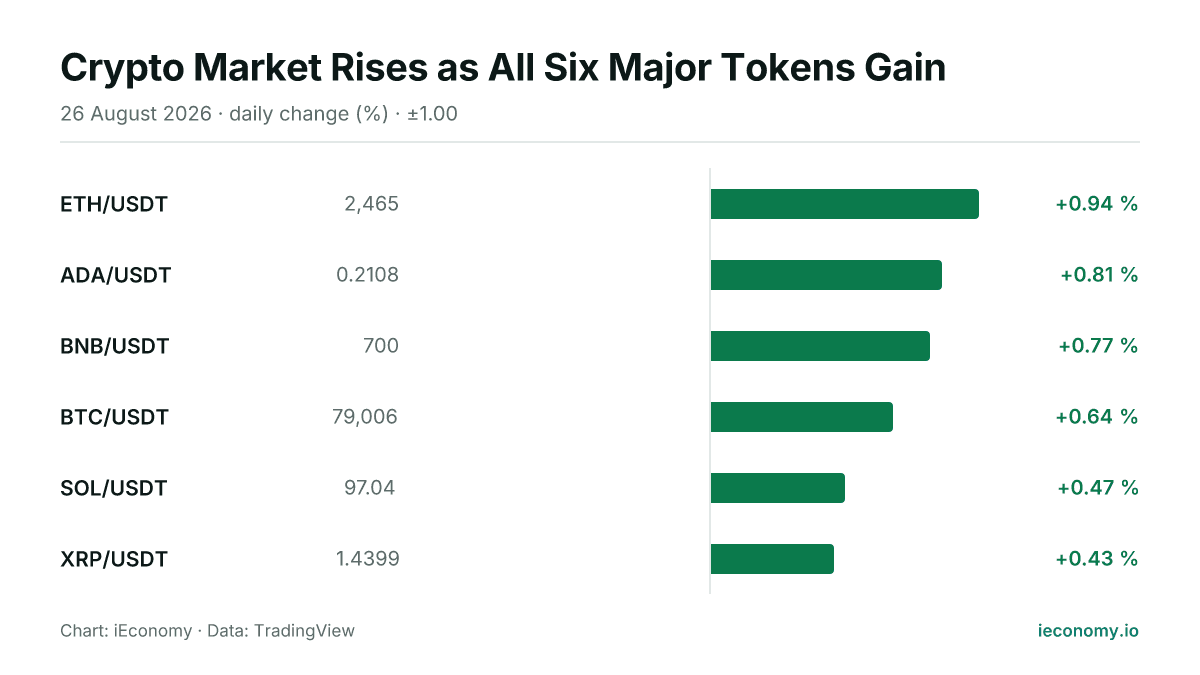
Crypto Market Rises as All Six Major Tokens Gain
The crypto market advanced on Wednesday, with all six major tracked assets posting gains. Ether led the move, rising 0.94% to $2,465, while bitcoin added 0.64% to $79,006.

Solana transactions hit 4.2 billion as SOL rebounds
Solana logged a record 4.2 billion transactions in July while tokenized real-world assets on the network rose toward $4 billion and SOL climbed about 40%.
Bitcoin Enters Bull-Phase as $83K Test Looms
CryptoQuant says Bitcoin’s 24% rebound has turned most of its market gauges bullish, but a weekly close above $83,000 is still needed to confirm the next bull phase.

Harmony weighs rollback after suspected ONE supply shock
Harmony says it is working with exchanges to freeze funds and is preparing a patch after claims that billions of unauthorized ONE tokens were minted and sent to trading venues.

Bitcoin BIP-110 branch stalls as mining support lags
The enforcing Bitcoin branch tied to BIP-110 has produced only two blocks since mandatory signaling began, leaving it far behind the main chain as miners show limited support.
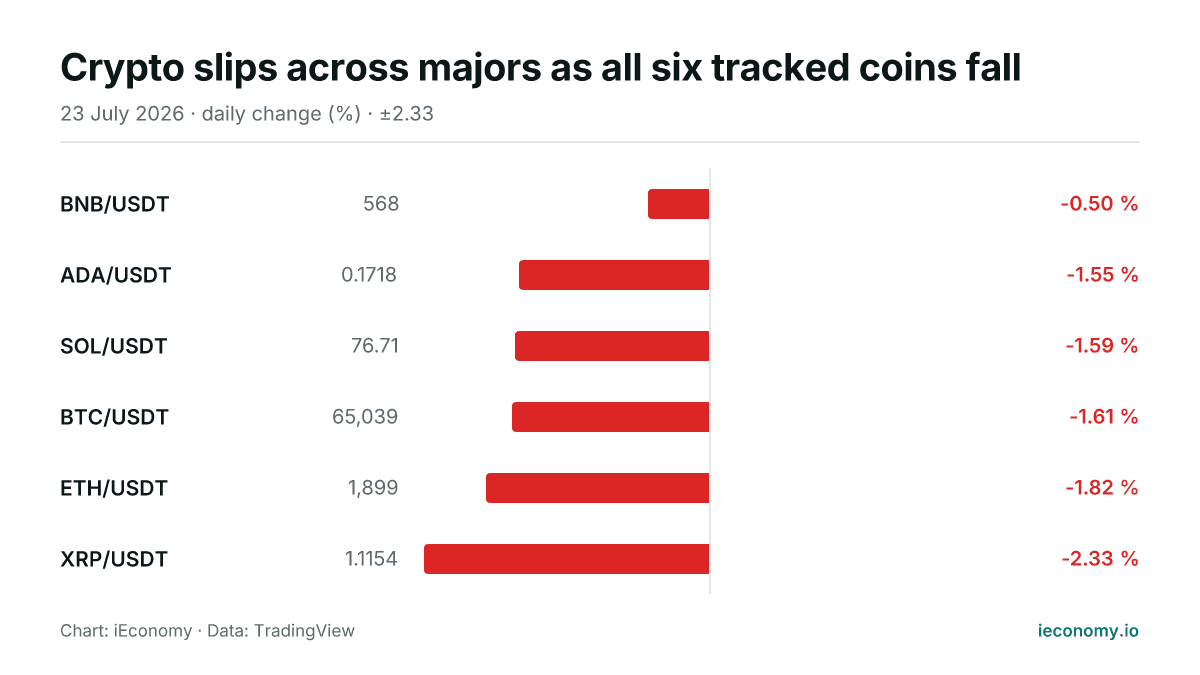
Crypto slips across majors as all six tracked coins fall
Bitcoin and ether led a broad daily decline in the crypto complex on Thursday, with every tracked large-cap token lower or flat. XRP was the weakest of the group, while BNB held up best.