Crypto Today: Liquid pauses after $320M BTC withdrawal
Bitcoin sidechain Liquid halted new transactions after about 4,000 BTC left its federation wallet. Orionx is shutting down after a custody shortfall, while Poland’s veto on crypto law held.

Jorge Franganillo / Wikimedia Commons (CC BY 2.0)
Bitcoin sidechain Liquid has paused operations after a large transfer from its federation wallet rattled the network. The event involved roughly 4,000 bitcoin, a sum worth about $320 million at the time, and it forced bridge nodes offline. Exchanges also stopped, or prepared to stop, deposits and withdrawals of L-BTC as operators assessed the situation.
Liquid halts as actors claim white-hat role
Blockstream, which provides technology for Liquid, began reaching out to the parties involved through signed onchain messages. The group behind the withdrawal has presented itself as white-hat hackers, a term used for security researchers who claim they are acting to expose weaknesses rather than steal funds. Liquid’s response shows how quickly a bridge or sidechain can be disrupted when control over federation wallets is challenged.
The episode adds fresh stress to a sector that still relies on operational trust as much as code. Even when an incident is framed as a security test, the practical effect is the same for users: transfers slow, liquidity becomes harder to move and confidence can weaken until the facts are settled. For market participants, the immediate issue is not just the amount of bitcoin involved but the function of the system that temporarily stopped working.
Orionx shutdown and Poland crypto bill setback
Elsewhere, Tether-backed Chilean exchange Orionx began shutting down after an audit found a custody shortfall of more than $7 million. A custody gap means customer assets held by the platform did not fully match the obligations on its books, which is the kind of problem that can force an exchange to wind down. The decision underscores how balance-sheet weaknesses can surface suddenly in crypto businesses that hold client funds.
In Europe, Polish lawmakers were unable to override President Karol Nawrocki’s veto of crypto legislation. The political setback came as the investigation into Zondacrypto broadens, keeping regulatory scrutiny on the local digital asset industry. The failed vote leaves the legal status of the bill unchanged for now and adds another layer of uncertainty for companies watching the policy landscape.
Taken together, the day’s developments show three different pressure points in crypto: infrastructure risk, custodial risk and regulatory risk. Liquid’s pause highlights the fragility of network operations, Orionx points to the consequences of missing assets, and Poland’s veto shows how quickly legislation can stall. For traders and exchanges, the common thread is that operational resilience remains just as important as market demand.
This article is not investment advice and recommends no asset, level or direction; a single session's move is not evidence of a trend. For background see Crypto, Altcoin, Bitcoin, and for terms the finance glossary.
Frequently asked questions
Why did Liquid pause operations?
Liquid paused after about 4,000 bitcoin left its federation wallet, leading bridge nodes to be disabled and transactions to stop.
What happened to Orionx?
The Chilean exchange started shutting down after an audit found a custody shortfall of more than $7 million.
What changed in Poland?
Lawmakers failed to overturn President Karol Nawrocki’s veto of crypto legislation, leaving the bill blocked for now.
Sources
Related News

Crypto Today: Strategy pauses BTC buys after $2B raise
Strategy raised about $2 billion through share sales, created a $1.6 billion cash reserve and did not add to its Bitcoin stash. Pakistan also set a licensing deadline for crypto firms.
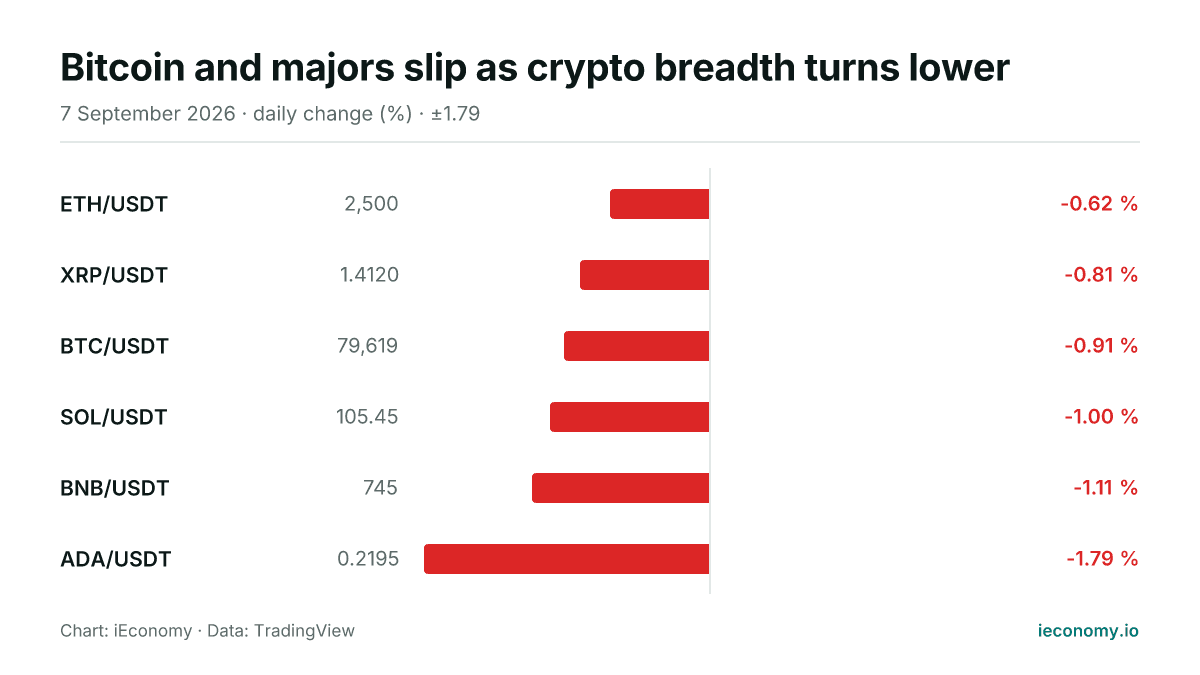
Bitcoin and majors slip as crypto breadth turns lower
All six tracked large-cap tokens finished lower or flat on Monday, with bitcoin, ether and the main altcoins sharing a broad but modest decline. The move was orderly rather than abrupt, but it left no major coin in positive territory.
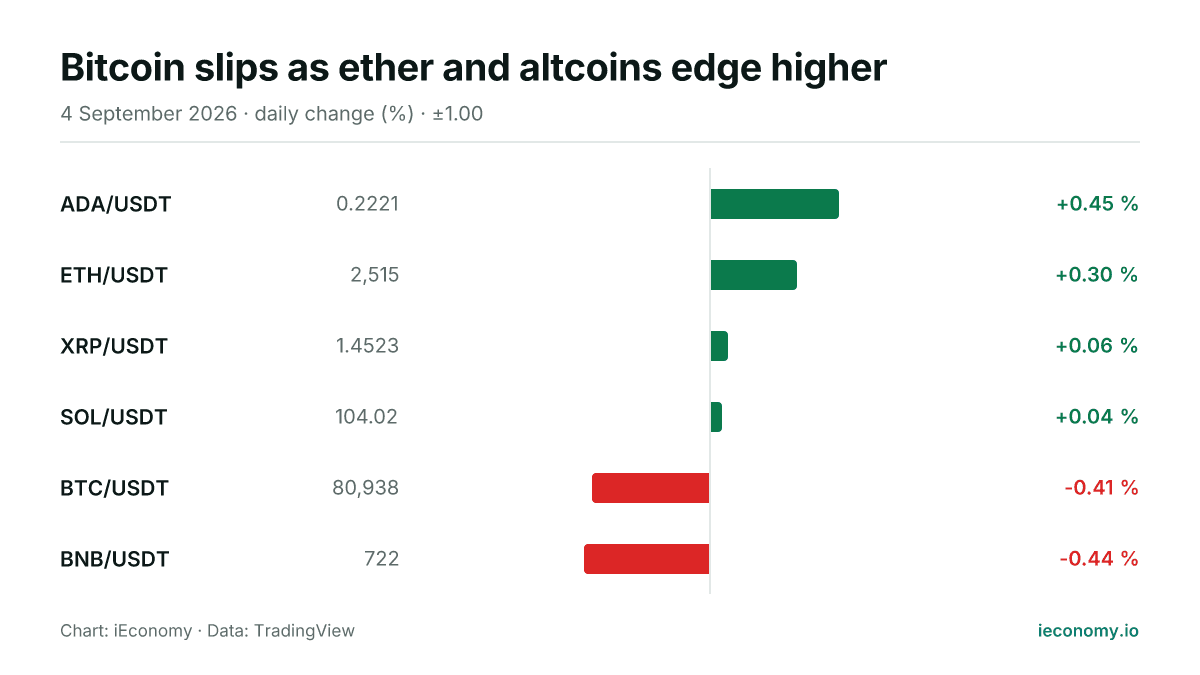
Bitcoin slips as ether and altcoins edge higher
Bitcoin and BNB were lower as ether, XRP, Solana and Cardano nudged higher on Friday. The day’s moves were narrow, but the split left the market with a mild risk-on tilt outside the largest coin.
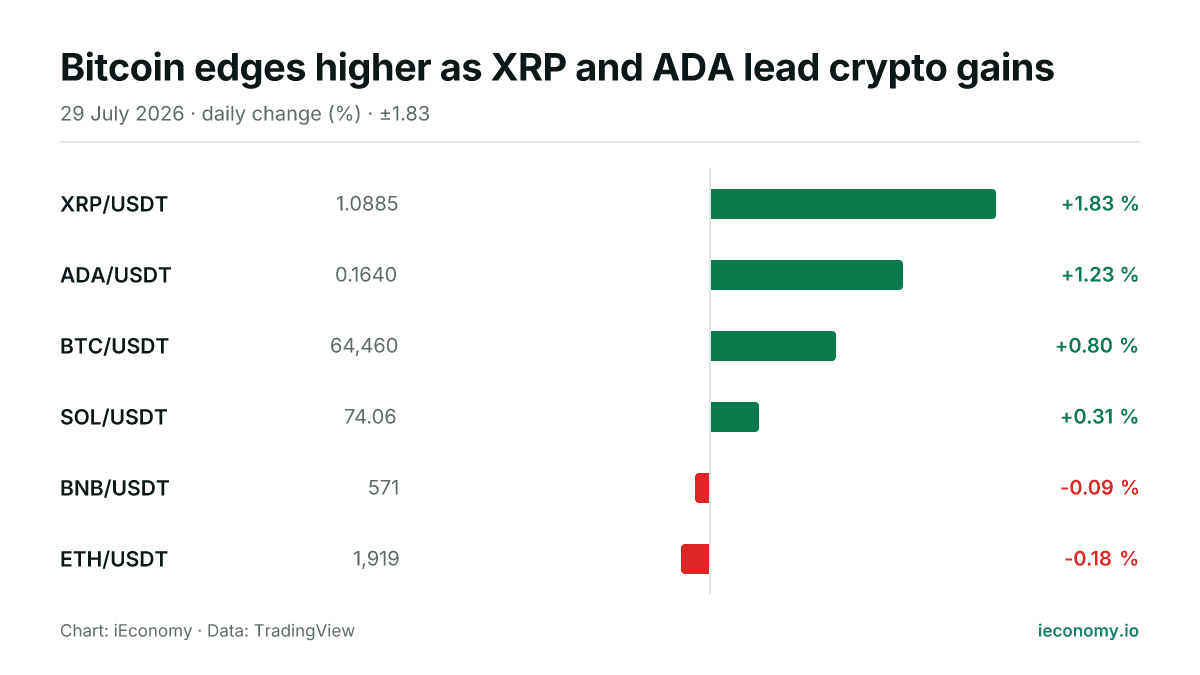
Bitcoin edges higher as XRP and ADA lead crypto gains
Crypto traded mixed on Wednesday, with four of the six tracked large-cap tokens higher and bitcoin, XRP and ADA posting the clearest advances. Ether and BNB were slightly lower, leaving the market broadly firmer but uneven.
Bitcoin BIP-110 enters mandatory signaling phase
Bitcoin’s BIP-110 has moved into mandatory signaling, but miner participation remains weak at under 3%, raising questions about whether enforcing nodes can sustain the change.
Bitcoin miners’ AI spending dwarfs early revenue
Public Bitcoin miners and related data-center firms have lifted capital spending sharply in 2026, but AI and HPC revenue has remained far smaller than the outlays.