EU cyber rules force wallet makers into 24-hour reporting
Crypto wallet providers in the EU face a strict new cyber reporting timetable, with early alerts due within 24 hours and heavier penalties for missed disclosures.

Crypto wallet makers operating in the European Union are now under a much tighter cyber reporting regime. The bloc’s new rules require providers of hardware and software wallets to move fast when they detect actively exploited bugs or serious security weaknesses. Missing the deadlines could leave firms exposed to administrative fines of up to $17.3 million.
Tight deadlines for security disclosures
Under the European Commission’s framework, firms must send an early warning within 24 hours of becoming aware of a severe vulnerability. A fuller notification is due within 72 hours, followed by a final report 14 days after corrective or mitigating steps become available. For severe incidents, another deadline applies within one month.
The reporting obligations are part of the Cyber Resilience Act, which took effect on Friday, according to the European Commission. The measure is aimed at improving protection for consumers and businesses that rely on connected products and digital services. For wallet providers, the change means cyber incidents must now be escalated far more quickly than under looser disclosure practices.
What the rule change means for wallets
The new timetable brings crypto wallet makers closer to the kind of incident reporting discipline already familiar in other regulated technology sectors. Hardware and software wallet providers will need internal processes that can identify whether a flaw is being actively exploited, assess its severity and start the notification chain almost immediately. That creates a practical compliance burden as well as a legal one.
The Commission’s approach reflects concern that delayed reporting can leave users exposed while attackers continue to exploit the same weakness. By forcing early disclosure, EU authorities are trying to shorten the window in which harmful code can spread or customer assets can be put at risk. The policy also puts more emphasis on documentation, since the later filings are meant to show what was found and what was done about it.
For the crypto industry, the rule reinforces that wallet products are not outside the bloc’s broader cybersecurity agenda. Firms selling into the EU will need to treat vulnerability management as a time-sensitive regulatory process, not just a technical response. The result is likely to be stricter compliance systems, faster escalation procedures and more formal coordination between engineering, legal and security teams.
This article is not investment advice and recommends no asset, level or direction; a single session's move is not evidence of a trend. For background see Crypto, Altcoin, Bitcoin, and for terms the finance glossary.
Frequently asked questions
What do crypto wallet providers have to report?
They must report severe vulnerabilities and exploited bugs, starting with an early warning within 24 hours, then a full notification within 72 hours.
What is the penalty for missing the deadline?
The rules allow administrative fines of up to $17.3 million.
When did the new EU rule take effect?
The European Commission said the Cyber Resilience Act took effect on Friday.
Sources
Related News
Brevo login flaw hit Trezor newsletter subscribers
An attacker used a Brevo login weakness to send phishing emails through client accounts, exposing Trezor’s newsletter list and affecting BitBox and CoinTracking users.

Crypto gains broaden as majors rise together
Bitcoin, ether and the largest altcoins traded higher on Monday, with all six tracked pairs in positive territory. XRP led the group while bitcoin posted the smallest advance, leaving the market broadly firmer but still uneven.
Bitcoin slips as altcoins mostly drift lower
Bitcoin, ether and most large-cap altcoins were weaker on Sunday, with only Cardano edging higher. The move was modest but broad enough to show a risk-off tone across the group.
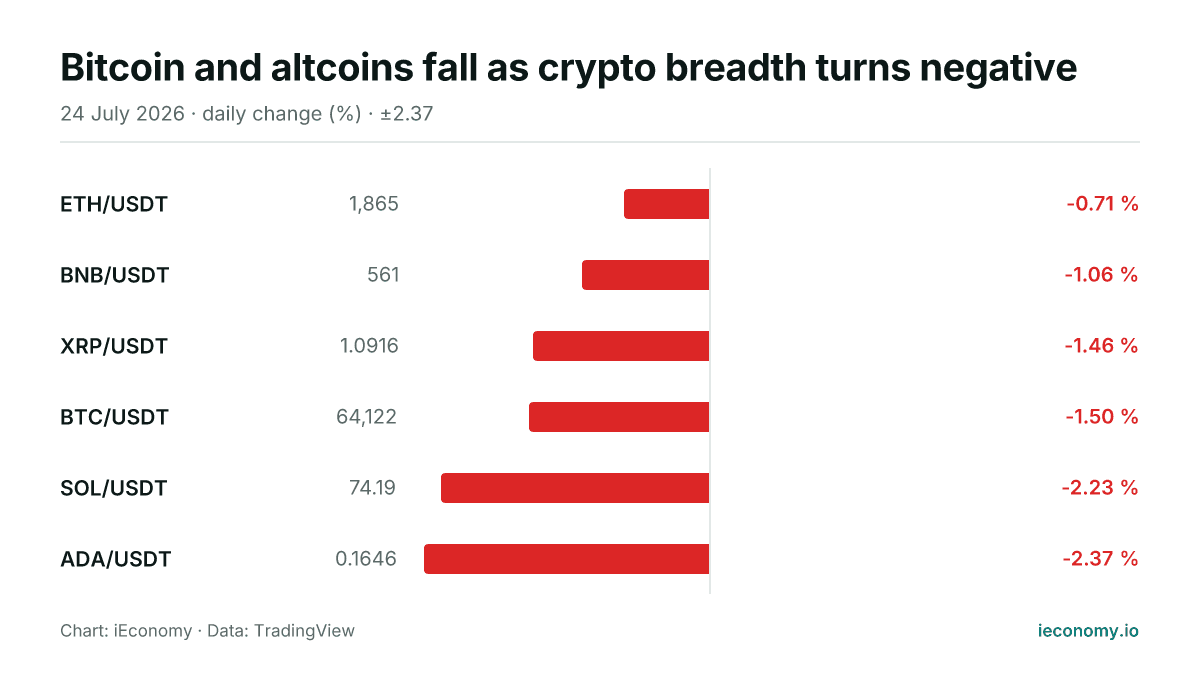
Bitcoin and altcoins fall as crypto breadth turns negative
All six tracked crypto assets were lower or flat on Friday, with bitcoin and ether retreating alongside the larger altcoins. The moves were modest in absolute terms but broad-based across the group.
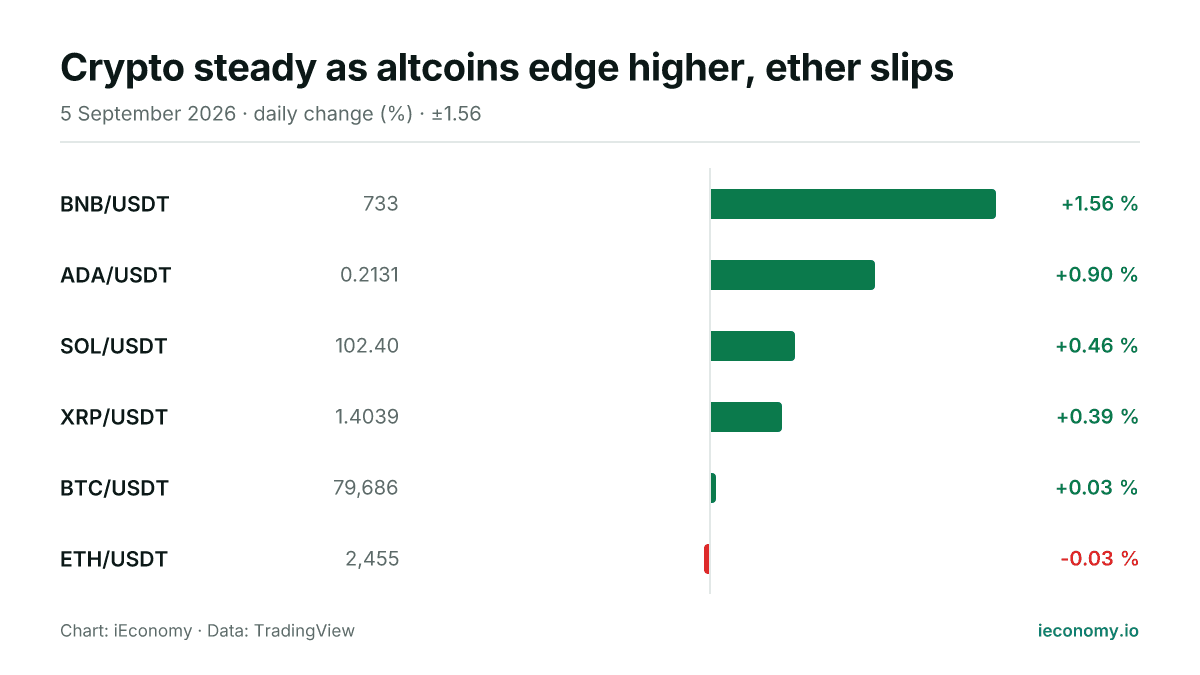
Crypto steady as altcoins edge higher, ether slips
Bitcoin was little changed while most large-cap altcoins posted modest gains on Saturday. Ether eased slightly, leaving the complex with a narrow spread between the strongest and weakest names.
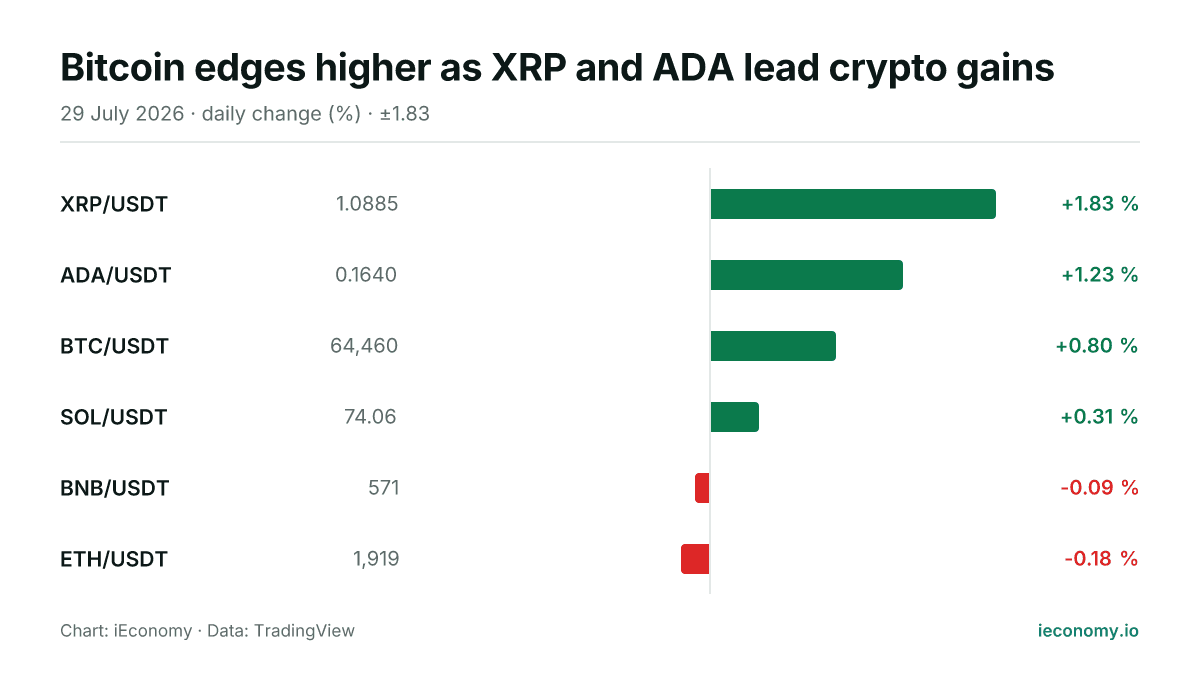
Bitcoin edges higher as XRP and ADA lead crypto gains
Crypto traded mixed on Wednesday, with four of the six tracked large-cap tokens higher and bitcoin, XRP and ADA posting the clearest advances. Ether and BNB were slightly lower, leaving the market broadly firmer but uneven.