U.S. payrolls jump 162,000 in August
U.S. hiring rebounded in August with payrolls up 162,000, far above forecasts, while unemployment stayed at 4.1%. The report pushed Treasury yields higher and shifted attention to inflation data.

U.S. employers added jobs at a much faster pace in August than economists expected, easing concerns that the summer slowdown in hiring was deepening. Nonfarm payrolls increased by a seasonally adjusted 162,000 last month, the Bureau of Labor Statistics said Friday, after a softer stretch earlier in the summer.
Labor market steadies
The unemployment rate held at 4.1%, matching forecasts and suggesting the labor market remained broadly stable. That reading was 0.2 percentage point lower than a year earlier, reinforcing the view that conditions have not deteriorated sharply despite the softer tone in recent months.
The headline payroll gain compared with a Dow Jones consensus estimate for only 53,000 new jobs. The stronger-than-expected number was enough to revive the picture of a resilient labor market, even as policymakers remain alert to signs of cooling in hiring and spending.
A separate household survey showed employment rising by 569,000 in August, while the labor force expanded by 683,000. That helped keep the jobless rate unchanged even as the labor force participation rate increased by 0.2 percentage point, a sign that more people were either working or looking for work.
Market reaction and Fed focus
The report kept the Federal Reserve’s attention on the balance between employment and inflation ahead of its next policy decision. With hiring still firm enough to avoid a rise in unemployment, investors are likely to see next week’s inflation figures as the key remaining input before the rate decision in less than two weeks.
Markets reacted quickly. Stock index futures moved lower after the release, while Treasury yields rose, especially on shorter maturities that are most sensitive to Fed policy expectations. That move reflected reduced urgency for immediate policy easing.
An alternative unemployment measure that includes discouraged workers and people working part time for economic reasons fell to 7.7%, its lowest level since June 2025. The decline added to the picture of a labor market that is softer than at its post-pandemic peak, but still solid by historical standards.
This article is not investment advice and recommends no asset, level or direction; a single session's move is not evidence of a trend. For background see Stocks, Bear Market, BIST 100, and for terms the finance glossary.
Frequently asked questions
How many jobs did the U.S. add in August?
Nonfarm payrolls rose by 162,000 in August.
What happened to the unemployment rate?
It stayed unchanged at 4.1%, in line with expectations.
How did markets respond to the report?
Stock futures fell and Treasury yields moved higher, especially at the short end of the curve.
Sources
Related News

Fed’s Barr backs a rate hike if inflation stays hot
Federal Reserve Governor Michael Barr said he would support higher rates if inflation fails to moderate, as markets weigh persistent price pressures and rising Treasury yields.

US earnings round-up: all 12 reporters came in above consensus
Twelve large US groups reported over the past week and all 12 posted EPS above consensus, though share moves were mixed.
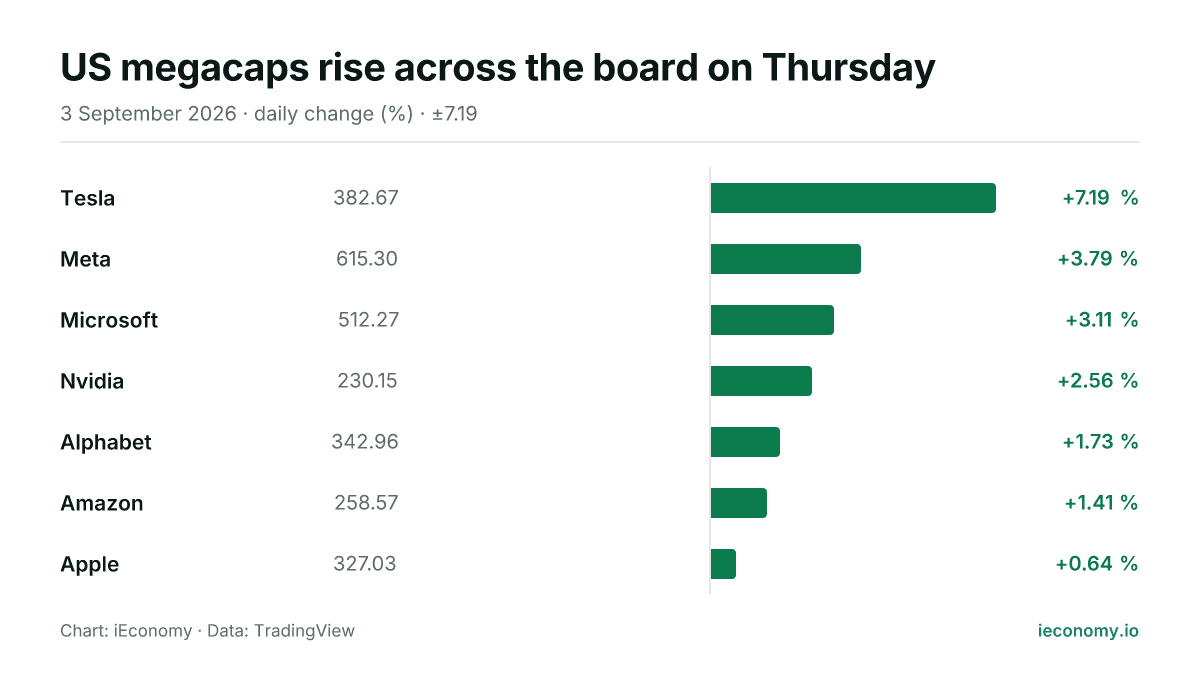
US megacaps rise across the board on Thursday
Apple, Microsoft, Nvidia and the other megacaps finished higher on Thursday, with all seven tracked stocks advancing. Tesla led gains, while Apple lagged but still rose, underscoring broad leadership rather than a narrow move.
July Jobs Report: Another Tepid Gain Expected
Economists forecast a modest 83,000 payroll increase with unemployment steady at 4.2%, as the Fed scrutinizes labor force participation and wage data for inflation clues.

Treasury market challenges Fed inflation stance, Gundlach says
Jeffrey Gundlach said Treasury yields show investors doubt the Fed will push hard enough to reach 2% inflation, after the central bank left rates unchanged.
Fed's Paulson Backs Current Rate Level
Philadelphia Fed President Anna Paulson says policy is 'mildly restrictive' and sufficient to guide inflation toward target, but remains open to adjustment if progress stalls.