USD/JPY Drops 1.22% in a Session, Testing 156.74
The yen strengthened against the dollar in a significant single-day move. We explain the general market mechanics that can drive such shifts and what they do…

Maklay62 / Wikimedia Commons (CC0)
The USD/JPY pair declined by 1.22% in the latest session, with the exchange rate moving to 156.744. This represents a notable appreciation of the Japanese yen against the US dollar over a short period.
A move of this magnitude in a major currency pair like USD/JPY typically draws attention, as it represents a shift in the valuation of two of the world's largest reserve currencies. It is crucial to analyze such moves within the context of general market mechanics rather than as isolated signals.
What Can Drive a Move Like This
Historically, sharp single-session moves in USD/JPY can be triggered by several general factors. A primary driver is often a shift in relative interest rate expectations between the US Federal Reserve and the Bank of Japan. If market participants perceive a potential narrowing of the policy divergence—such as increased odds of a Fed rate cut or reduced expectations for further BOJ policy normalization—it can lead to yen buying and dollar selling.
Another common mechanic is a broad-based retreat in the US dollar. The dollar can weaken due to a reassessment of US economic data, leading to capital flows out of dollar-denominated assets. Conversely, the move can originate from yen-specific demand, which can arise during periods of market stress or volatility when the yen is sometimes sought as a traditional, albeit not always consistent, haven currency. Large, concentrated flows from institutional players or option-related hedging activity around key technical levels can also amplify intraday moves.
What This Move Does and Does Not Signal
A 1.22% decline shows a clear shift in short-term sentiment and positioning. It indicates that selling pressure on the dollar outweighed buying pressure for that session, potentially leading to a reassessment of near-term support and resistance levels on trading charts. Such a move can force market participants holding certain positions to adjust their exposure, which can create follow-through volatility in the immediate aftermath.
However, it is essential to state plainly that a single session's move is not a trend. It does not, by itself, signal a reversal of the longer-term macroeconomic drivers that have influenced USD/JPY, such as the sustained interest rate differential. One day of trading provides a snapshot of sentiment but lacks the confirmation needed to establish a sustained directional change. The move tells a long-term reader that volatility is present and that key thematic drivers are being actively weighed, but it does not provide conclusive evidence about their future trajectory.
This article is not investment advice and recommends no asset, level or direction; a single session's move is not evidence of a trend. For background see Currency, Cross Rate, Currency Pair, and for terms the finance glossary.
Frequently asked questions
Does a 1.22% drop mean the long-term USD/JPY uptrend is over?
No. A single-day move, regardless of its size, is insufficient to declare a long-term trend reversal. Macro trends in currency pairs are built over weeks and months, driven by fundamental policy and economic divergences. One session represents a data point within a much larger set.
What is the most common cause for a sudden yen rally?
Historically, the most common general catalysts are shifts in interest rate expectations. If traders price in a less hawkish Fed or a more hawkish Bank of Japan than previously anticipated, it can lead to rapid yen appreciation. Market positioning, where many investors are heavily betting on one direction, can also magnify moves when sentiment suddenly shifts.
Should traders pay extra attention to USD/JPY after such a move?
Increased attention is common as the market digests the move. It can lead to heightened volatility in the near term as new support levels are tested and as traders assess whether the drivers were technical or fundamental. However, the key for analysis remains the subsequent price action and whether it confirms a change in the underlying market narrative.
Sources
Related News
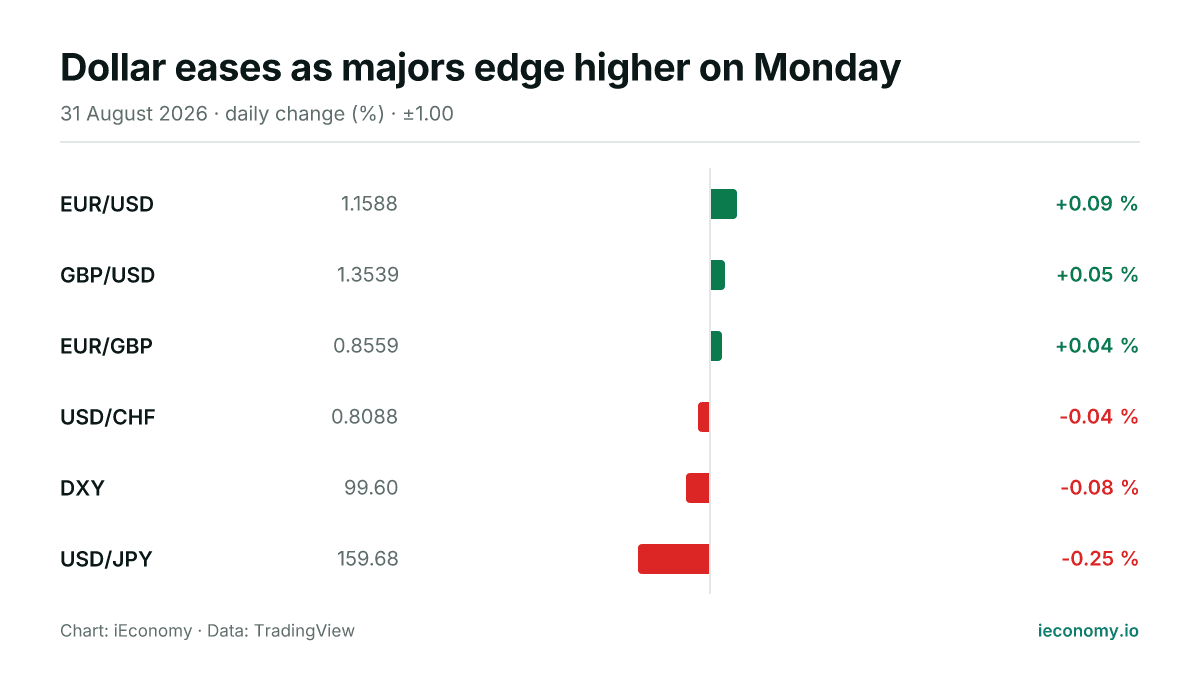
Dollar eases as majors edge higher on Monday
The dollar index slipped on Monday while EUR/USD, GBP/USD and EUR/GBP firmed. USD/CHF and USD/JPY were lower, leaving the cross-currency picture slightly firmer against the greenback.
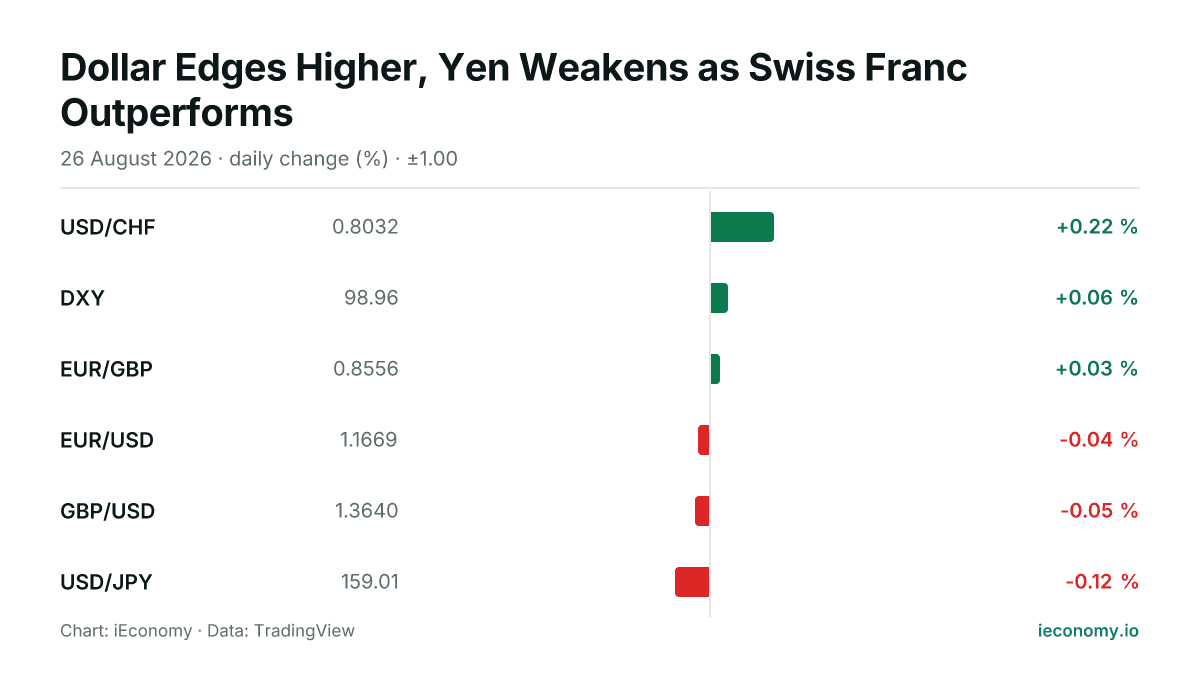
Dollar Edges Higher, Yen Weakens as Swiss Franc Outperforms
The US dollar index posted a modest gain on Wednesday, supported by a weaker yen and steady performance against European majors. The Swiss franc was the day's standout, climbing against the dollar.
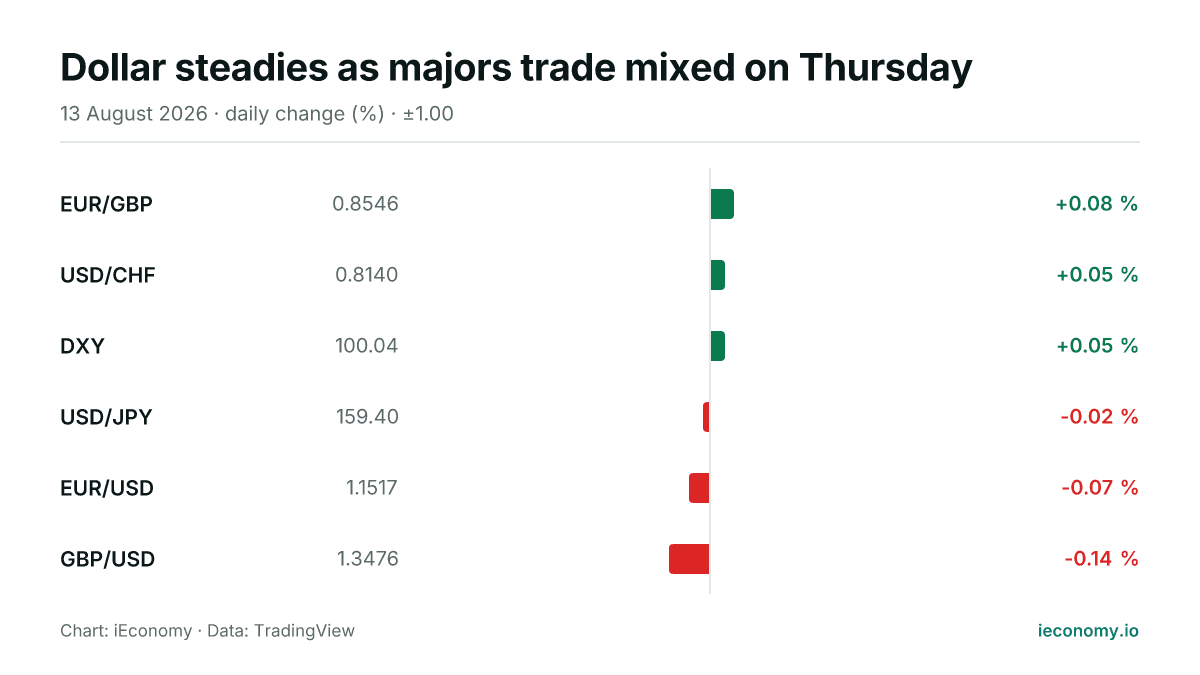
Dollar steadies as majors trade mixed on Thursday
The dollar index was slightly firmer on Thursday, while EUR/USD and GBP/USD slipped and USD/JPY eased. Crosses were comparatively quiet, leaving a mixed tone across the major FX pairs.

Australian Dollar Rallies as Commodities Firm, RBA Holds Line
The Aussie dollar extended gains against the greenback, supported by firmer metals prices and a central bank in no rush to cut rates.
GBP/USD Swings Sharply After UK Inflation Data Surprises
The pound whipsawed against the dollar following a consumer price reading that diverged notably from economist forecasts.

EUR/USD Tests Key Resistance as Traders Reassess ECB Path
The euro pushed toward a multi-month high against the dollar as markets recalibrated expectations for European Central Bank policy.