What Is Compound Interest? Why Starting Early Can Matter More Than the Rate
Compound interest is when your returns start earning returns of their own. Starting early can beat a higher rate — we show the exact math with a worked example.
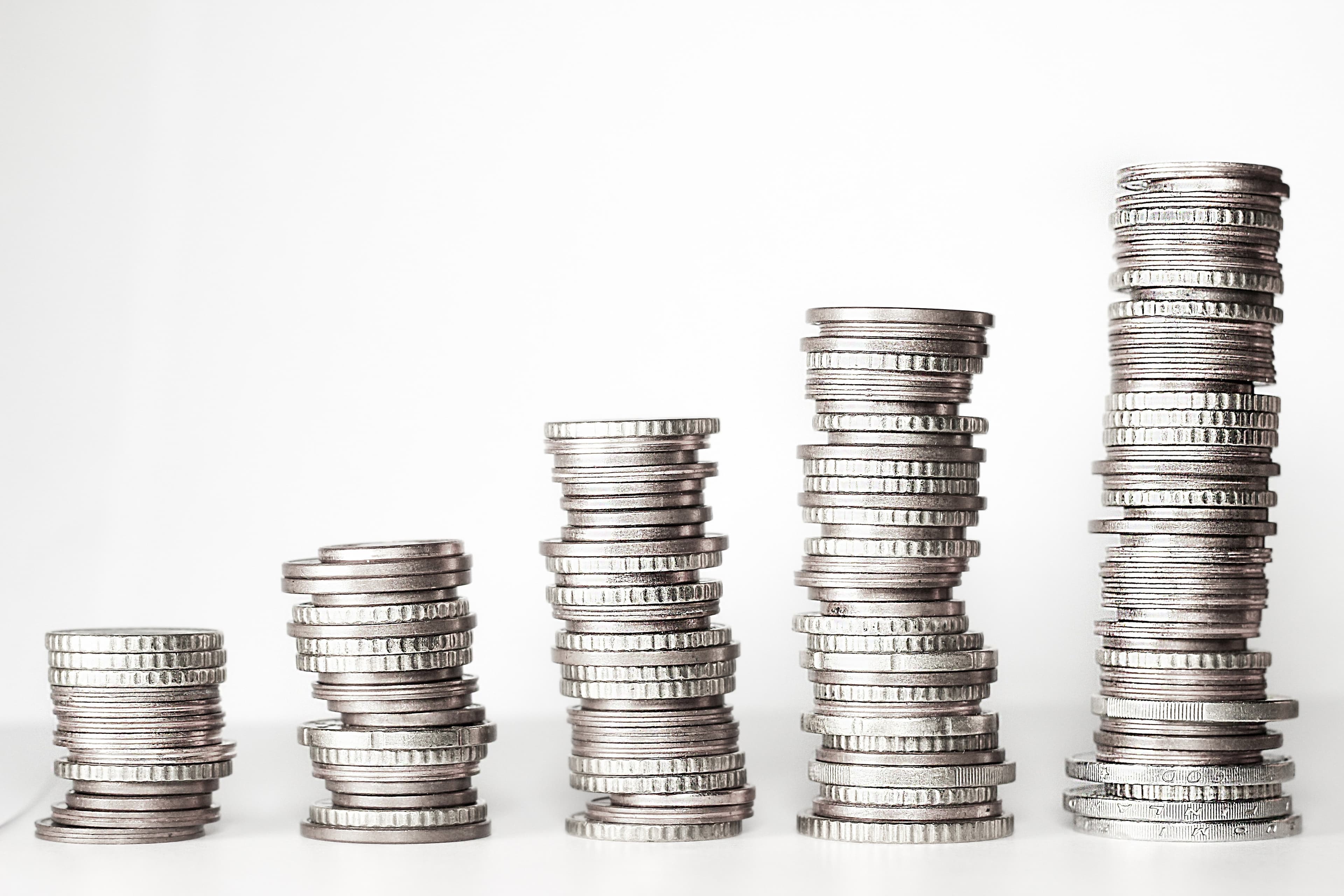
Kevin Schneider / Wikimedia Commons (CC0)
Compound interest is sometimes called the eighth wonder of the world — whether Einstein actually said that is historically unverified, but the underlying math is not in dispute: when you leave your returns in place instead of withdrawing them, your money grows exponentially rather than in a straight line. It is the mechanism behind everything from a basic savings account to a diversified retirement portfolio.
Below is how compound interest actually works, how it differs from simple interest, and why starting early can matter more than chasing a higher rate — with real numbers, not just the general idea.
How compound interest works
With simple interest, every period earns a return only on the original principal, so the payout is the same every year as long as the principal doesn't change. With compound interest, the return earned each period is added to the principal, and the next period earns a return on that larger amount. In short: your returns start earning their own returns.
The formula: Balance = Principal × (1 + rate)years. If you add regular contributions, each one starts compounding from the moment it is added, for whatever time remains.
A concrete example: $10,000 over 20 years
Put $10,000 into an account earning a flat 7% a year (a round number chosen purely to illustrate the math, not a promise about any specific account or investment) and leave it for 20 years. The two methods diverge sharply:
- Simple interest: a fixed $700 a year (7% of $10,000), for a total of $24,000 after 20 years.
- Compound interest: each year's return is added to the balance and earns its own return, reaching $38,697 after 20 years — more than 60% higher than the simple-interest result.
The gap is not about the rate — it's about TIME. Stretch the same comparison to 30 years and the gap widens dramatically, because compound growth is exponential while simple growth is linear.
Why starting early can beat a higher rate
Compare two savers, both earning the same 7% a year:
Alex starts at 25, contributes $6,000 a year for just 10 years (through age 34) — a total of $60,000 — then stops contributing entirely and lets the balance sit untouched. By 65, that balance has grown to roughly $631,046.
Jordan starts at 35 and contributes the same $6,000 a year every year through age 64 — 30 years, a total of $180,000, three times what Alex put in. At the same 7% return, Jordan's balance at 65 is roughly $566,765.
Alex contributed a third of what Jordan did, yet ends up with about 11% more — because Alex's money had ten extra years to compound. This isn't a cherry-picked story; it's a standard compound-interest calculation anyone can reproduce with the calculator below.
Does compounding frequency matter?
At the same annual rate, an account that compounds monthly will always edge out one that compounds annually, because interest is added to the balance 12 times a year instead of once and starts earning its own interest sooner. The gap is small at low rates over short periods and becomes noticeable at higher rates over long ones.
Compounding can work against you too
Everything above shows compounding working in your favor, but the same mechanism runs in reverse: unpaid credit card debt accrues interest that gets added to the balance, and the next month's interest is charged on that larger amount. Paying only the minimum and carrying a balance is the most common way people experience compounding working against them — and credit card rates are typically far higher than the return most investments realistically offer.
Three common mistakes
- Withdrawing returns early: Cashing out earnings breaks the compounding chain — that money never gets the chance to earn its own return again.
- Ignoring fees: Recurring costs like management fees or trading commissions compound too, just like a negative return. A seemingly small annual fee difference can add up to a large gap over decades.
- Assuming "a few years won't matter": As the Alex-and-Jordan example shows, each early year carries far more growth time than a later one — the real cost of waiting is usually bigger than it looks.
Run your own numbers
The examples above use fixed, illustrative assumptions. To see how your own principal, rate, term and contributions compound year by year, use the compound interest calculator — it shows both the total result and a full yearly breakdown.
Frequently asked questions
What is the actual difference between compound and simple interest?
Simple interest is calculated only on the original principal and pays the same amount every period. Compound interest adds each period's earnings back to the principal, so the next period earns a return on a larger base — which is why compound growth accelerates over time compared with simple interest.
Does compound interest only apply to savings accounts?
No. The same mechanism drives reinvested stock dividends, mutual and index fund growth, reinvested bond coupons, and — working against you — the growth of unpaid credit card debt. Wherever earned (or owed) amounts are added back to the principal and start generating their own share, that is compounding.
Does this account for inflation?
The examples above show nominal growth, not adjusted for inflation. To see the real, purchasing-power return, you would need to separately adjust the result for the inflation rate expected over the period.
This article is for information only and is not investment advice. The rates used in the examples are illustrative and are not a promise of return for any specific account or investment.
Sources
Related News

Candlestick Patterns: Chart Formations and What They Mean
Single, two and three-candle patterns — doji, hammer, bullish engulfing, morning star — with the structure of each, the trend it is looked for in, and an original diagram for every one.

Stock Market Hours and Holidays: NYSE and Nasdaq Guide
A clear reference to regular U.S. stock market hours, pre-market and after-hours trading, early closes, holiday closures, and how bond-market holidays differ.

How to Cash In Savings Bonds: Electronic and Paper
Learn how to redeem U.S. savings bonds through TreasuryDirect or a bank, when penalties apply, how partial redemptions work, and what to do with inherited or lost bonds.

What is Alpacadabraz NFT?
Alpacadabraz, an NFT project that started in October 2021 with the genesis collection, is one of the collections linked to smart contracts.

How to Buy Virtual Land in Metaverse - 1
How to Buy Virtual Land in Metaverse. Investing in virtual land may have sounded silly a few years ago. Today, the situation is different.

What is the Ukrainian Meta History NFT Museum?
Ukraine's Meta History War Museum NFT platform has launched 54 NFTs to raise money for the Ukrainian government. These NFTs feature Tweets