What is the Canadian Currency? TL Value of Canadian Dollar…
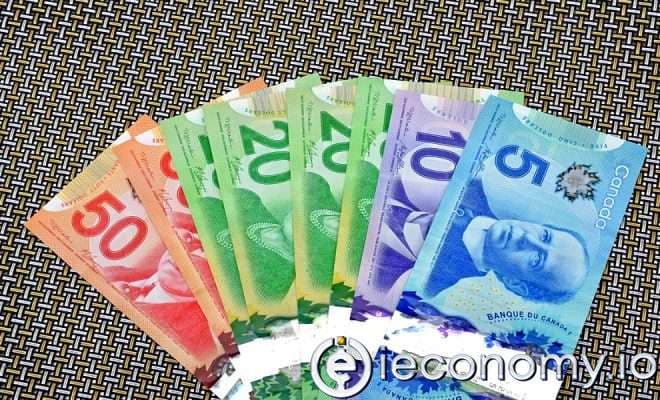
The Canadian dollar is the currency of Canada. The sub-unit of the Canadian dollar is referred to as 'cents' or cents. 1 Canadian dollar is 100 cents.
You may also be interested in:
What is the Currency of the State of Israel? TL Value of the Israeli Currency… The official currency of the State of Israel, one of the most powerful economies in the world, has been the “New Israeli Shekel” since January 1, 1986. The new shekel has been in use since 1986, when it replaced the old shekel, which was divided into 100 agoras at a ratio of 1000:1. https://ieconomy.io/en/what-is-the-currency-of-the-state-of-israel-tl-value-of-the-israeli-currency/Frequently asked questions
What is the official currency of Canada and its international currency code?
The official currency of Canada is the Canadian dollar. Its international currency code, used in foreign exchange markets, is CAD.
What institution is responsible for issuing Canadian dollar banknotes?
The authority to issue Canadian dollar banknotes belongs to the Bank of Canada, the country's central bank. The physical printing is carried out by the Canadian Bank Note Company.
Besides Canada, where is the Canadian dollar used as an official currency?
Apart from Canada, the Canadian dollar is also the official currency in the French overseas collectivity of Saint Pierre and Miquelon.
What are the primary factors that influence the exchange rate value of the Canadian dollar?
The value of the Canadian dollar fluctuates based on factors like global market conditions, domestic economic policies, inflation rates, foreign trade balances, and geopolitical events. Its exchange rate chart is monitored closely due to this sensitivity.
Related News

Candlestick Patterns: Chart Formations and What They Mean
Single, two and three-candle patterns — doji, hammer, bullish engulfing, morning star — with the structure of each, the trend it is looked for in, and an original diagram for every one.

Stock Market Hours and Holidays: NYSE and Nasdaq Guide
A clear reference to regular U.S. stock market hours, pre-market and after-hours trading, early closes, holiday closures, and how bond-market holidays differ.

How to Cash In Savings Bonds: Electronic and Paper
Learn how to redeem U.S. savings bonds through TreasuryDirect or a bank, when penalties apply, how partial redemptions work, and what to do with inherited or lost bonds.

What Is an ETF? How Funds Trade and Track Value
An ETF is a fund that trades on an exchange like a stock, but its share price is kept close to underlying value through creation and redemption. Learn how it works and where the risks sit.

What Is Arbitrage? How It Works, Its Types, and the Risks
What is arbitrage and how does it work? We explain its five types, a real case that shook a market, and why retail investors rarely get the textbook version.

“How to Trade” with GCM Forex
It is known that there are 58 country stock exchanges that are members of the World Stock Exchange Federation, excluding affiliates and...