August Review and Outlook: Treasury turns more active
Treasury expanded long-dated buybacks and other market interventions in August while the Federal Reserve kept rates unchanged despite hawkish messaging from Chair Kevin Warsh.

August marked a sharper split between fiscal and monetary policymakers. The Treasury became more active in support of market functioning, while the Federal Reserve delivered hawkish language but left rates unchanged for a fifth straight meeting. That contrast shaped trading across the rates market and lifted yields to fresh highs for the year.
Treasury steps up market support
On Aug. 19, Treasury Secretary Scott Bessent unveiled a larger long-end buyback program aimed at 10- to 30-year off-the-run coupons. The operation size will double to at least $4 billion per operation starting Sept. 9, under a plan the Treasury described as the “Treasury Twist.” The move added to a run of recent interventions that also included U.S.-Japan yen operations, stablecoin proposals tied to the GENIUS Act and sanctions targeting Iran’s trading partners.
The buyback program matters because it is designed to improve liquidity in less-traded long-dated bonds. By taking older issues out of circulation, the Treasury can help ease pressure in parts of the market where demand and trading can be thinner. The step also signaled that officials were willing to use the balance sheet and market operations more aggressively than the central bank was using rates.
Fed holds fire as rhetoric gets tougher
By contrast, Fed Chair Kevin Warsh kept up a hawkish tone through two Federal Open Market Committee meetings and at Jackson Hole, but policy itself did not change. He reaffirmed the 2% inflation target and argued that softer inflation data may not yet show a real improvement in the underlying trend. Markets treated that message as a warning that policy tightening could still be on the table, even without an immediate move.
Bond markets reacted quickly. Pricing for a September rate hike jumped from 36% to 67% after the Jackson Hole speech, and yields moved higher, especially at the front end of the curve. The reaction reflected a market that heard a more forceful central-bank message than it had been pricing in earlier in the month.
Longer-dated yields also climbed to notable levels. The 30-year Treasury yield reached 5.34%, its highest since the summer of 2007, while the 10-year yield rose to 4.76%, a 17-month high. The result was a bear flattening of the curve, with shorter maturities moving up faster than longer ones as traders reassessed the policy path.
For U.S. rates, the main message from August was not just that yields were rising, but that the drivers behind them were different. The Treasury was working to stabilize liquidity in key market segments, while the Fed was leaning on guidance rather than action. That combination left investors parsing whether the next market move would come from official bond operations or from a shift in interest-rate policy.
What August changed for rates
The month showed that policy transmission is no longer coming from one institution alone. Treasury actions were aimed at market plumbing, while the Fed’s stance was aimed at inflation credibility. Together, they pushed rate expectations higher and made the long end of the Treasury market more sensitive to official signals.
For markets, that means the path ahead depends on both liquidity management and monetary-policy signaling. August left traders facing a more interventionist Treasury and a Fed that is sounding tougher without yet acting.
This article is not investment advice and recommends no asset, level or direction; a single session's move is not evidence of a trend. For background see Markets, Bear Market, BIST 100, and for terms the finance glossary.
Frequently asked questions
What did the Treasury announce in August?
It expanded its long-end buyback program for 10- to 30-year off-the-run coupons, with operations rising to at least $4 billion starting Sept. 9.
How did the Federal Reserve respond?
The Fed held rates steady for a fifth consecutive meeting even as Chair Kevin Warsh kept a hawkish tone and defended the 2% inflation target.
How did the bond market react?
Yields moved higher, with the 30-year Treasury yield reaching 5.34% and the 10-year yield rising to 4.76%, while expectations for a September rate hike increased.
Sources
Related News

Crude oil jumps as U.S. expands strikes on Iran
Oil prices surged after Washington launched another round of strikes on Iran, reviving fears over Middle East supply risks and the Strait of Hormuz.
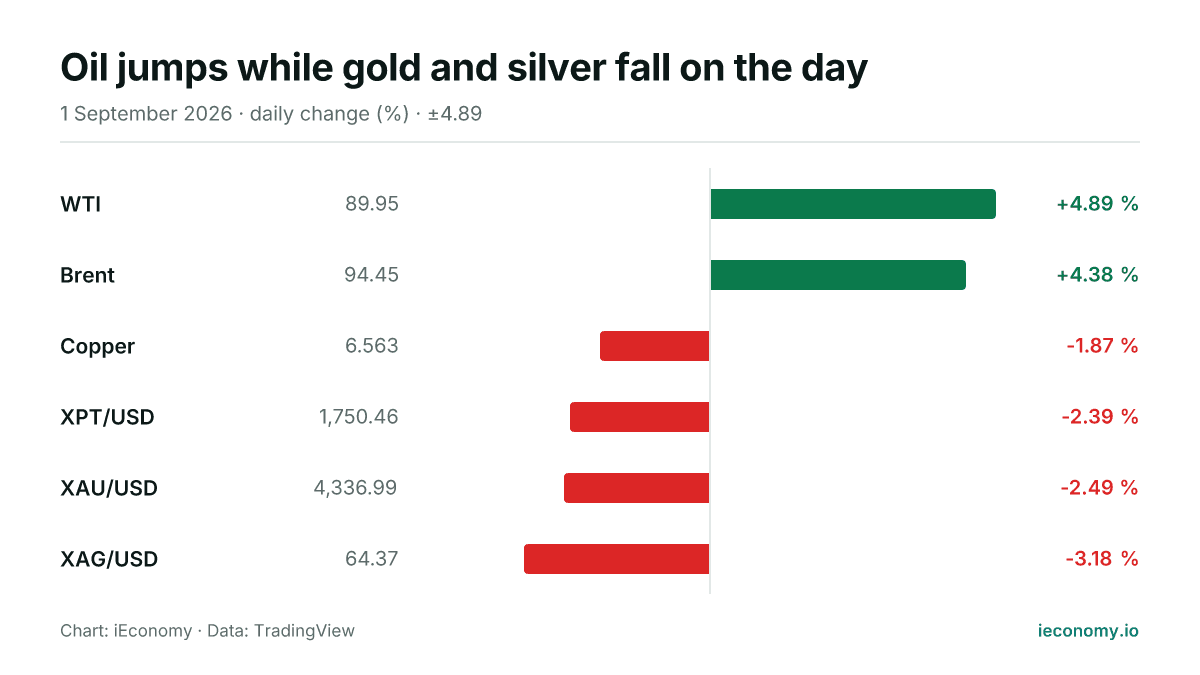
Oil jumps while gold and silver fall on the day
Crude oil rose sharply on Tuesday, while gold and silver retreated and copper also eased. The move left only two of six tracked commodities higher, underscoring a broad split in the day’s price action.
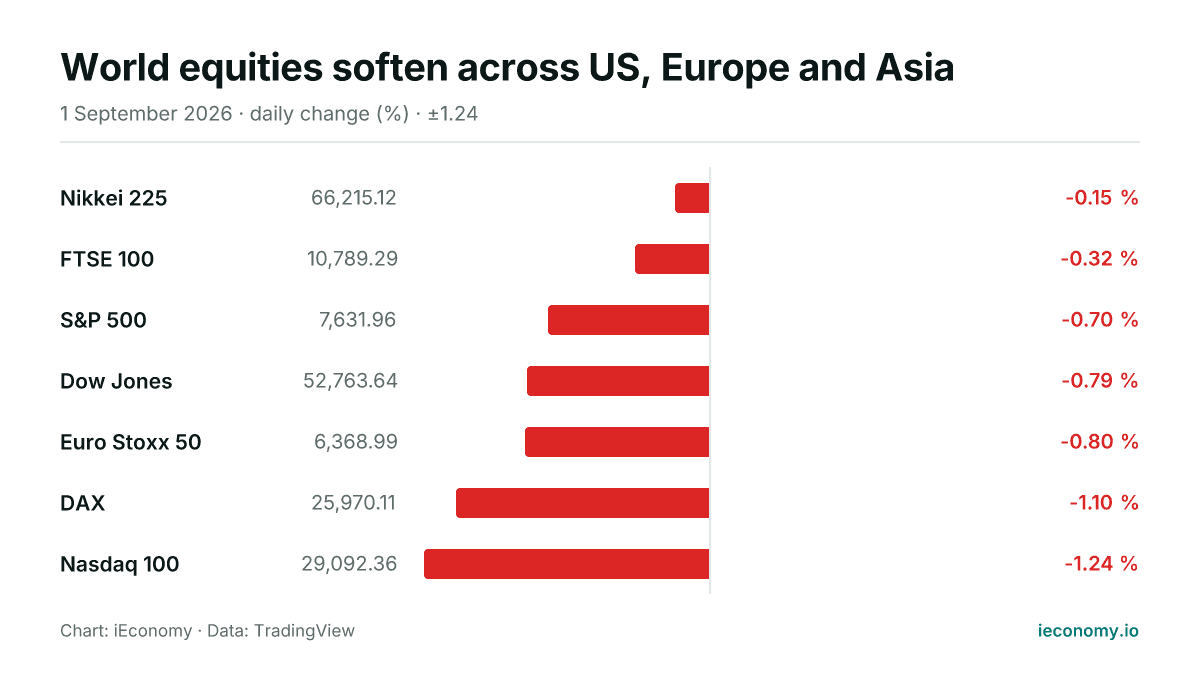
World equities soften across US, Europe and Asia
All seven tracked equity benchmarks were lower or flat on Tuesday, with US growth shares lagging and Europe also under pressure. The move was broad rather than concentrated, leaving no market in positive territory.
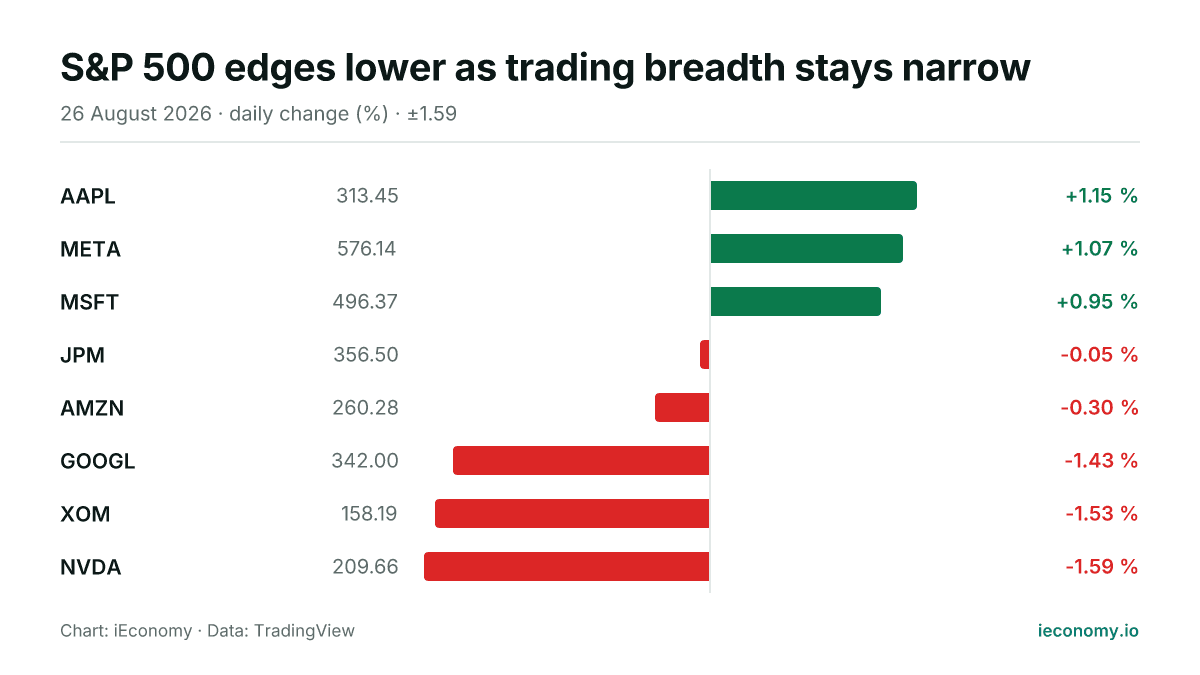
S&P 500 edges lower as trading breadth stays narrow
The S&P 500 ended Wednesday at 7,675.70, down 0.02% as five of the eight tracked constituents fell and three rose. Apple was the strongest performer, while Nvidia was the weakest.
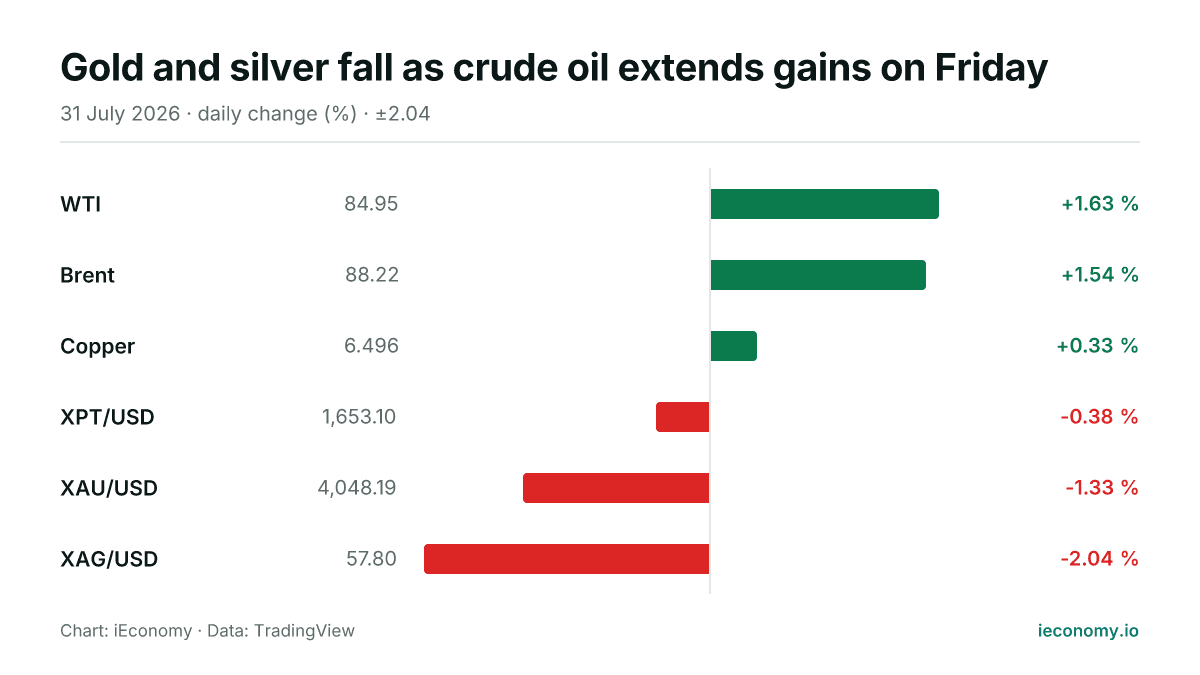
Gold and silver fall as crude oil extends gains on Friday
Gold and silver were lower while crude oil moved higher on 2026-07-31, with copper also slightly firmer. The day left a mixed commodity tape, led by strength in energy and weakness in precious metals.

Oil Prices Slip as Supply Concerns Ease and Demand Outlook Softens
Crude benchmarks fell for a third straight session amid signs of easing supply-side tightness and tempered demand forecasts.