BNB Surges 7% in a Day, Outpacing Broader Crypto Market
Binance's native token posted a sharp single-day gain. We examine the typical mechanics behind such altcoin moves and what they mean for long-term trends.

Jorge Franganillo / Wikimedia Commons (CC BY 2.0)
The price of BNB, the native token of the Binance ecosystem, rose sharply on the day, posting a gain of 6.92% to trade at $771.39. This move represents a significant outperformance relative to many major cryptocurrencies, which saw more muted daily action. As a core utility asset for the world's largest crypto exchange, BNB's price dynamics are often closely watched as a barometer for activity and sentiment within that specific ecosystem.
Single-session rallies of this magnitude are not uncommon in the volatile altcoin market, but they are not, in themselves, indicative of a new long-term trend. Such moves can be driven by a confluence of technical factors, ecosystem-specific developments, or broader market rotations. The key for observers is to understand the general mechanics that can produce these surges and to contextualize them within a longer-term framework.
Potential Drivers of the Rally
While the specific catalyst for today's move is not identified here, BNB price action often correlates with activity and developments within the Binance ecosystem. Historically, surges can be tied to increased utility demand, such as a rise in transaction volume on the Binance Smart Chain (BSC) that requires BNB for gas fees, or heightened activity for token launches and trading on the Binance exchange itself, where BNB is used to pay for fee discounts. Announcements regarding new use cases, token burns, or ecosystem upgrades from the Binance team can also catalyze short-term buying pressure.
Furthermore, BNB can sometimes move independently of Bitcoin, acting as a 'beta play' on the broader crypto sector. During periods when traders seek exposure to crypto but rotate out of larger assets, capital can flow into major altcoins like BNB. This rotation is often amplified by leveraged trading, where a modest price increase can trigger a cascade of short-covering or forced buy-ins, accelerating the daily gain. The token's deep liquidity and central role in a major exchange make it a frequent vehicle for such speculative flows.
What This Move Does and Does Not Signal
A 7% daily gain is a strong performance, but it is crucial to recognize that a single session does not establish a trend. It signals a burst of net buying pressure within a 24-hour window, which can be due to any of the factors mentioned above or simple market noise. For a long-term reader, it serves as a data point indicating current strength but must be weighed against weekly and monthly charts to assess sustainability. Isolated spikes are frequently retraced or consolidated in subsequent sessions as the market digests the move.
For BNB specifically, such a move does highlight the token's ongoing sensitivity to Binance-centric developments and its status as a bellwether for one of crypto's largest centralized ecosystems. It does not, however, provide definitive insight into the long-term regulatory landscape for exchanges, the competitive pressure from other layer-1 blockchains, or the fundamental adoption metrics of the BSC network. These structural factors will ultimately determine BNB's price over quarters and years, not a single day's trading.
This article is not investment advice and recommends no asset, level or direction; a single session's move is not evidence of a trend. For background see Crypto, Altcoin, Bitcoin, and for terms the finance glossary.
Frequently asked questions
Does a 7% daily gain mean BNB is starting a bull run?
No. A single session's move, no matter how large, is not sufficient to declare a new bull run or long-term trend. Bull markets are defined by a series of higher highs and higher lows over extended periods, supported by fundamental developments and sustained buying volume. Today's action is a single data point in that larger context.
What typically causes BNB to rally like this?
Historically, BNB rallies can be driven by several general mechanics: increased on-chain activity and gas fee demand on the Binance Smart Chain, positive news or upgrades from the Binance ecosystem, broader crypto market rotations into altcoins, and leveraged trading dynamics (like short squeezes). It often acts as a proxy for sentiment towards the Binance exchange's health and growth.
Should investors change their long-term strategy based on this?
A data-led approach cautions against making long-term strategic decisions based on one day of price action. While notable, this move does not alter the fundamental narrative around BNB's utility, competitive position, or regulatory environment. Long-term strategy should be based on a sustained analysis of those core factors, not intraday volatility.
Sources
Related News

Cardano Surges Over 10% in Single Session
ADA's sharp daily gain highlights the volatile nature of altcoin markets, often driven by sentiment shifts and broader crypto momentum rather than specific…

Kalshi US traffic surges as legal scrutiny intensifies
Kalshi’s US web visits rose sharply over the past year, while trading volume grew even faster and disputes over its sports contracts moved closer to the Supreme Court.

Michigan presses court bid to block Kalshi
Michigan’s attorney general said a state court approved a preliminary injunction against Kalshi, escalating a dispute over prediction markets as a Supreme Court fight approaches.

Dogecoin Surges 14% in a Day Amid Broad Altcoin Rally
The meme-inspired cryptocurrency's sharp single-day gain reflects a volatile market environment where sentiment and liquidity often drive short-term price…
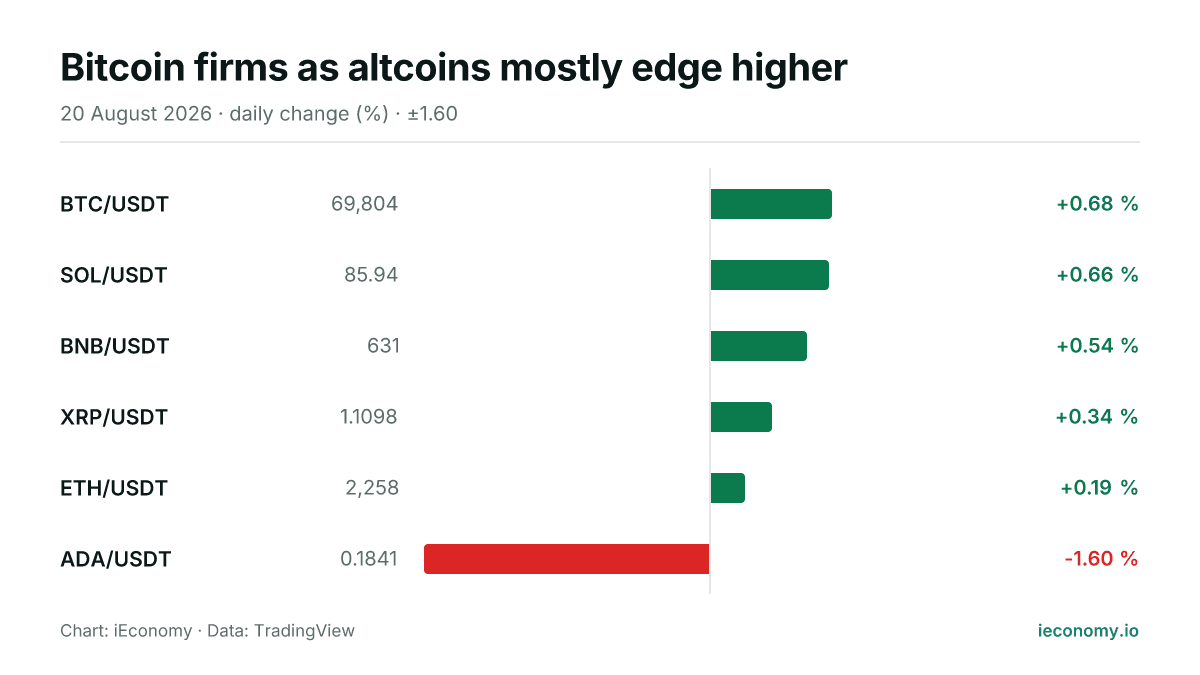
Bitcoin firms as altcoins mostly edge higher
Bitcoin, ether and most large-cap altcoins were firmer on Thursday, with five of six tracked tokens in the green. Cardano lagged as the day’s only loser, underscoring how uneven cross-asset crypto trading remains.
Strategy Sells Bitcoin to Support Dividends and Buybacks
Strategy sold 1,638 Bitcoin to raise cash for STRC dividend payments and repurchases, while also increasing its USD reserve and continuing MSTR share sales.