Gold and silver slide as oil edges lower
Commodities were mixed on Saturday, with gold and silver taking the heaviest losses while crude oil eased and copper was the only gainer. The day left six tracked markets mostly lower or flat, highlighting how quickly precious metals can move in percentage terms.
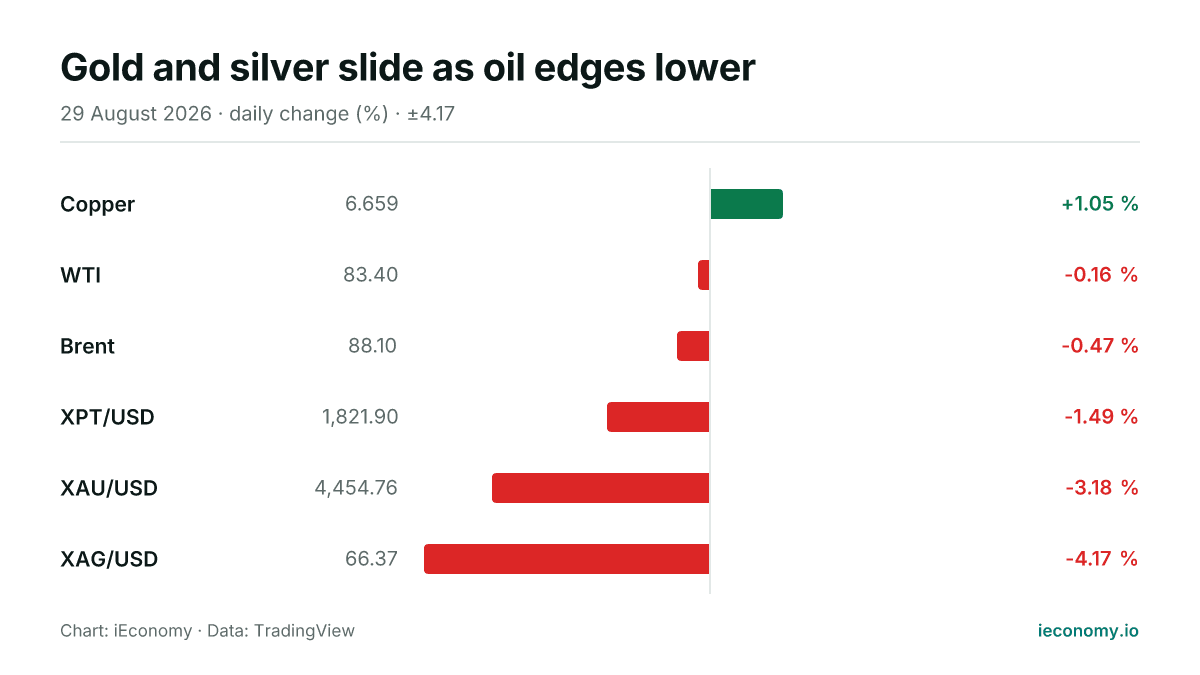
Chart: iEconomy · Data: TradingView
Commodities were mixed on Saturday, with precious metals leading the decline and crude oil also softer. Of the six tracked markets, only copper finished higher, while gold and silver posted the sharpest losses.
What moved and by how much
WTI slipped 0.16% to 83.40 and Brent fell 0.47% to 88.10, leaving the crude complex modestly lower. The moves were contained relative to the metals, suggesting a calmer tone in energy than in the precious-metals space.
| Instrument | Last | Change |
|---|---|---|
| Copper | 6.659 | +1.05 % |
| WTI | 83.40 | -0.16 % |
| Brent | 88.10 | -0.47 % |
| XPT/USD | 1,821.90 | -1.49 % |
| XAU/USD | 4,454.76 | -3.18 % |
| XAG/USD | 66.37 | -4.17 % |
XAU/USD dropped 3.18% to 4,454.76, while XAG/USD fell 4.17% to 66.37. Platinum, tracked as XPT/USD, also weakened, declining 1.49% to 1,821.90, which left the precious-metals group broadly under pressure.
The standouts at each end
Copper was the only riser, advancing 1.05% to 6.659. That made it the clearest positive outlier in a session where five of the six tracked instruments were lower or flat.
At the other end, silver was the weakest of the group by percentage move, with gold also falling sharply. In day-to-day market mechanics, that kind of spread often reflects how leveraged participation and positioning can amplify moves in higher-volatility contracts.
What a long-term investor should take from one day
One session does not define a trend, but it can show which parts of a complex are moving more violently. For long-term investors, the main takeaway is that precious metals can reprice faster than crude oil on a percentage basis even when the absolute price levels remain high.
The mechanics matter: futures-linked markets adjust continuously, so a single day can reflect position changes, liquidity conditions and risk management rather than a lasting shift in fundamentals. That means short-term noise should be separated from portfolio horizon, especially when prices remain well above common reference ranges.
For diversified holders, the useful discipline is to compare one day's move with broader volatility and allocation needs, not to infer direction from a single print. On Saturday, the evidence was simply that metals were under pressure while oil was softer and copper held up.
This article is not investment advice and recommends no asset, level or direction; a single session's move is not evidence of a trend. For background see Markets, Bear Market, BIST 100, and for terms the finance glossary.
Frequently asked questions
Which commodity moved the most on Saturday?
Silver moved the most among the tracked markets, falling 4.17% to 66.37. Gold was also down sharply, while crude oil's declines were comparatively modest.
Was crude oil weaker across the board?
Both Brent and WTI were lower, with Brent down 0.47% and WTI down 0.16%. That shows broad softness in the oil complex, but not a heavy sell-off.
What should investors focus on after a single day like this?
They should focus on the size of the move, the relative ranking across assets and what that says about volatility. A single session can be useful for context, but it is not enough on its own to establish a durable market direction.
Sources
Related News
Gold, silver and oil slip as copper edges higher
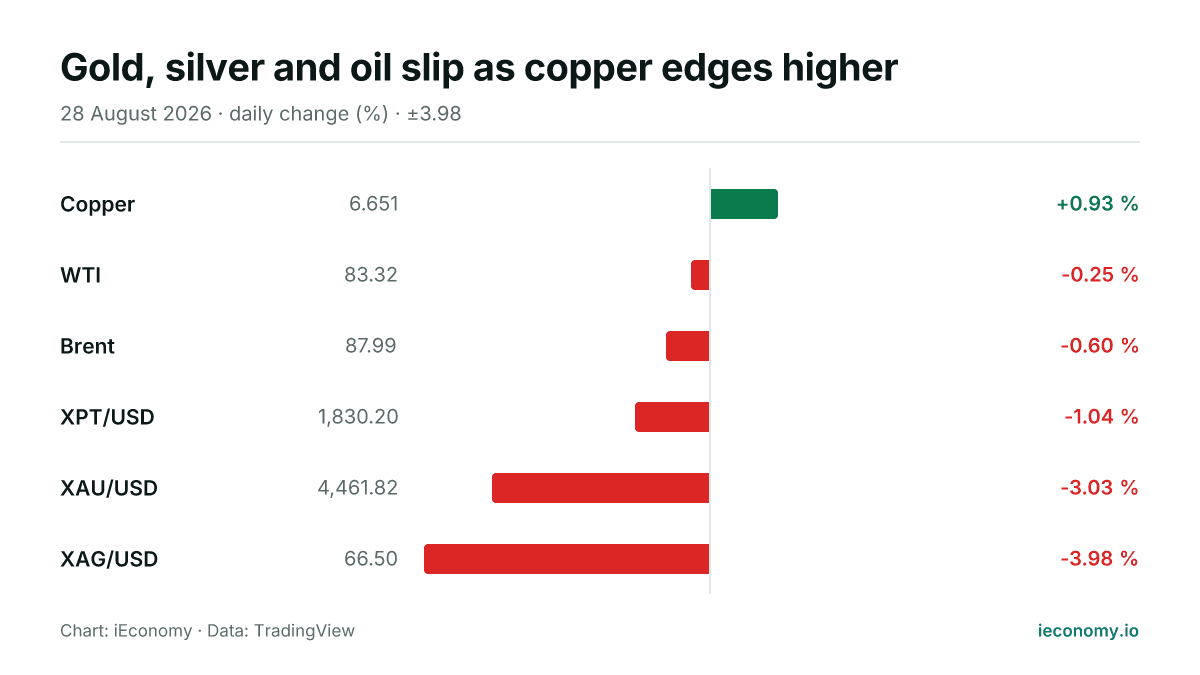
On Friday, gold and silver led losses in the tracked commodity set while crude oil also eased and copper was the only gainer. The move left five of six instruments lower or flat, with the heaviest declines in precious metals.
Oil leads commodity gains as gold edges higher
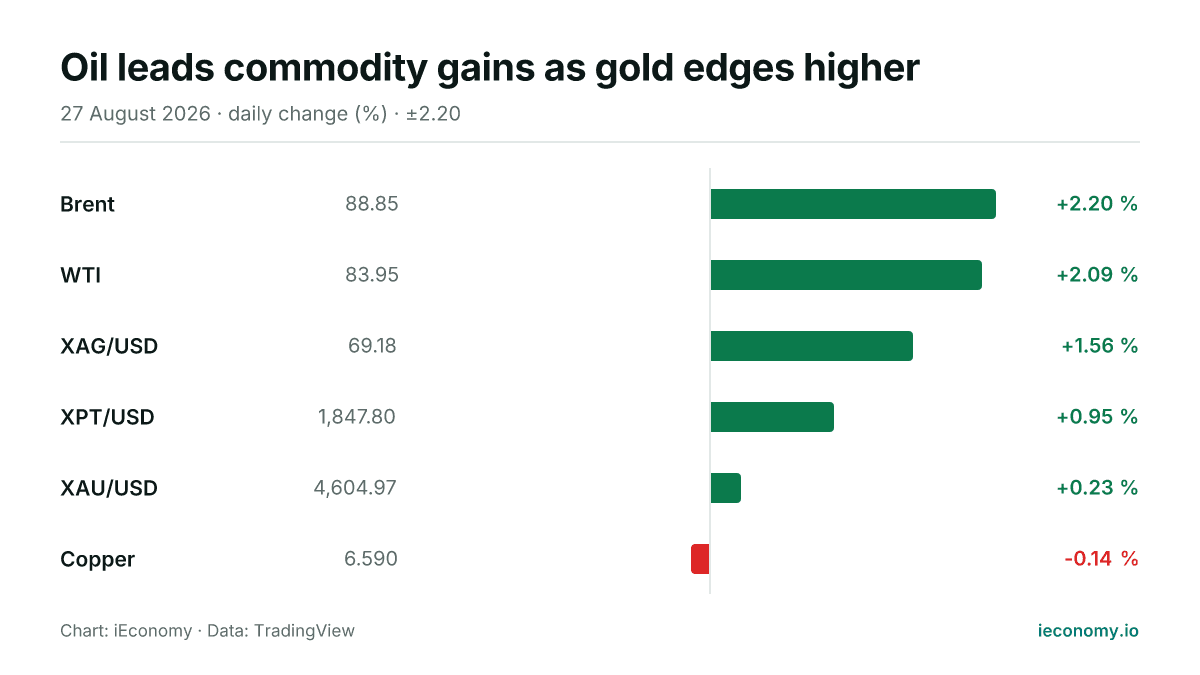
Crude oil outpaced the broader commodity board on Thursday, while silver and platinum also advanced. Gold rose more modestly and copper was the only tracked market to finish lower.
Gold steady as oil sells off on Tuesday
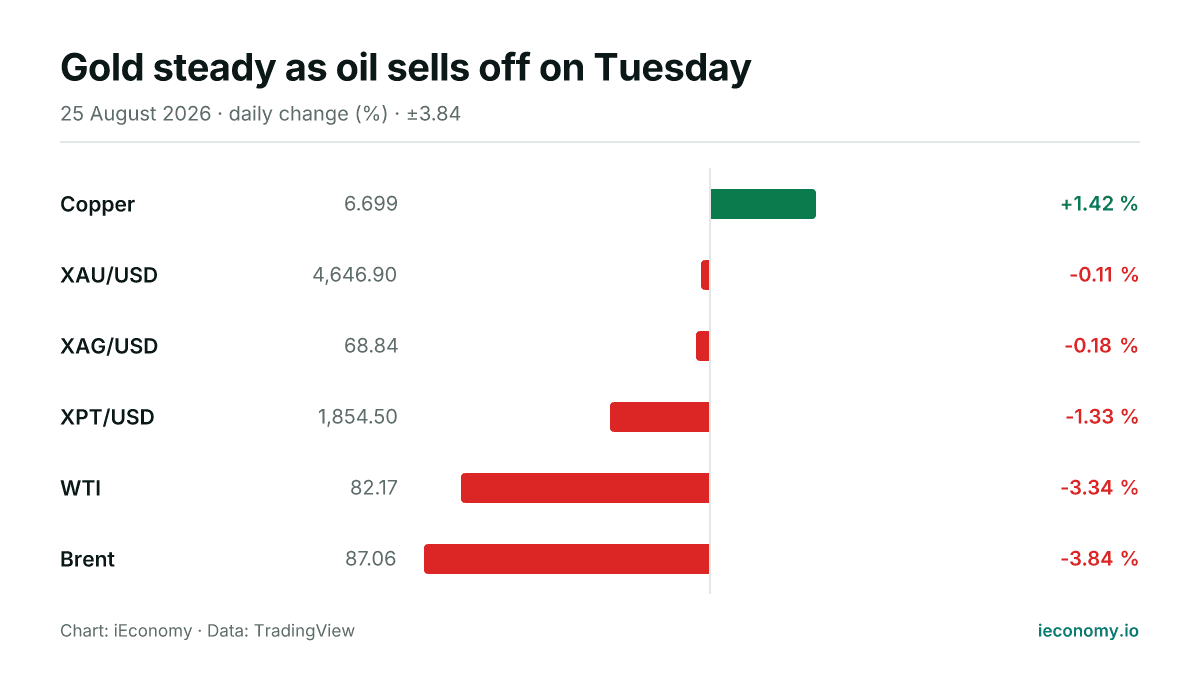
Gold and silver were little changed on Tuesday, while crude oil fell sharply and copper led the small group of gainers. The session left most tracked commodities lower or flat, with one clear outperformer.

European Stocks Rally on Growing Hopes for an ECB Rate Cut
Major continental indices advanced as softer economic data fueled expectations of imminent monetary easing.
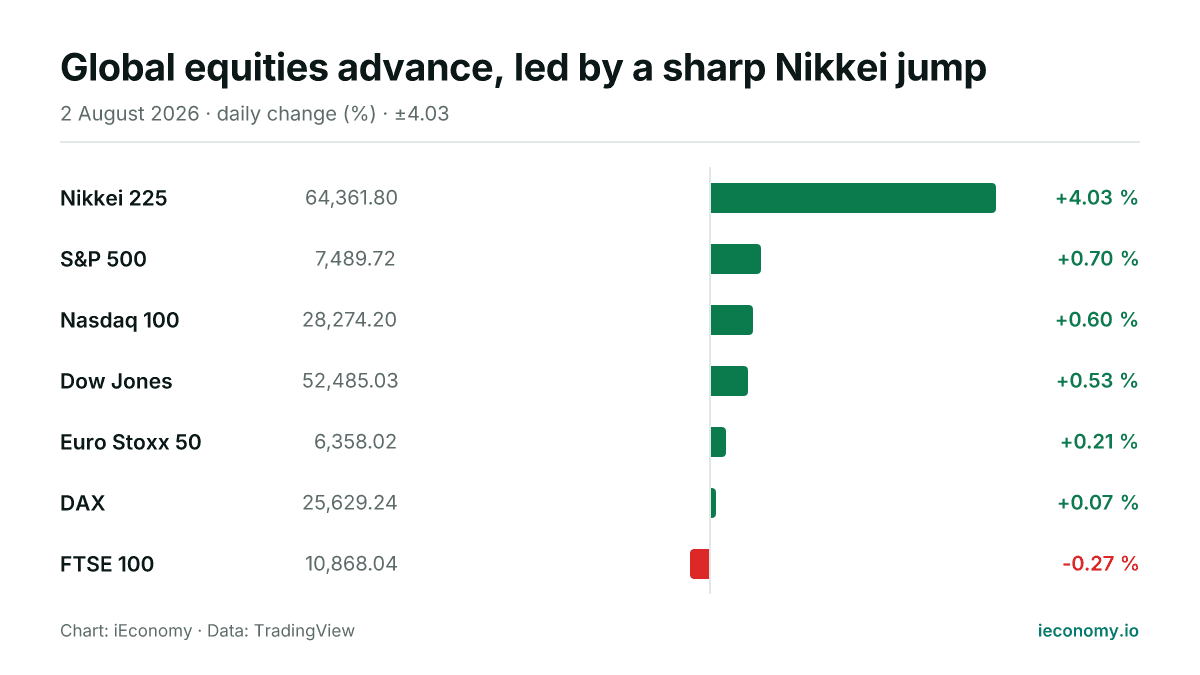
Global equities advance, led by a sharp Nikkei jump
Most major equity benchmarks were higher on the day, with Japan’s Nikkei 225 the clear outlier on the upside. In Europe, gains were modest and London lagged slightly.

McEwen shares cross above 200-day average
McEwen Inc. stock moved above its 200-day moving average on Friday and traded as high as $21.07, with the shares up about 3.6% in afternoon trading.