Bitcoin slips below $80,000 after strong US jobs data
A much stronger-than-expected August payrolls report pushed Bitcoin lower as traders pared expectations for a Federal Reserve rate cut later this month.

Jorge Franganillo / Wikimedia Commons (CC BY 2.0)
Bitcoin fell back below the $80,000 mark after the latest US labor-market report showed hiring ran well ahead of economists’ expectations in August. The move came as traders reassessed how likely the Federal Reserve is to cut interest rates this month.
Jobs data resets Fed expectations
The US economy added 162,000 nonfarm payroll jobs in August, nearly three times the consensus forecast of 56,000. That stronger reading eased some of the urgency for near-term policy easing and quickly fed into broader market pricing.
Bitcoin dropped from about $81,300 to a low near $78,600 after the release before recovering part of the loss. It was trading around $79,500 later in the session, still below the round-number level that had held earlier in the day.
The report matters for crypto because digital assets have increasingly traded in step with expectations for US monetary policy. When investors see fewer reasons for the Fed to cut rates, risk assets often lose some support, especially after a sharp run-up.
Broader market effect
The latest payrolls surprise landed at a time when rate expectations were already divided ahead of the next Federal Open Market Committee meeting. That makes each major data release more influential for assets that are sensitive to liquidity and discount-rate assumptions.
Cointelegraph noted that the labor-market beat added pressure to Bitcoin as traders repriced the odds of a September cut. The reaction was swift, showing how closely crypto remains tied to macroeconomic releases even when the underlying news comes from outside the digital-asset market.
Separately, a rival Bitcoin fork using the Blake2b algorithm recorded its first trading activity, with coins changing hands on the Neoxa exchange at $350. The new listing was a side development rather than the main driver of the broader market move.
For Bitcoin, the immediate takeaway was a sharper focus on US economic data and the Fed’s next decision. The payrolls figure did not change the network itself, but it altered the near-term trading backdrop that has been influencing crypto prices throughout this cycle.
This article is not investment advice and recommends no asset, level or direction; a single session's move is not evidence of a trend. For background see Crypto, Altcoin, Bitcoin, and for terms the finance glossary.
Frequently asked questions
Why did Bitcoin fall after the jobs report?
The stronger-than-expected payrolls number made a near-term Fed rate cut look less certain, which pressured Bitcoin lower.
How many jobs did the US add in August?
The economy added 162,000 nonfarm payroll jobs in August.
Where did Bitcoin trade after the selloff?
Bitcoin fell from about $81,300 to around $78,600 before recovering to roughly $79,500.
Sources
Related News

Bitcoin Volatility Builds as Bond Yields Near Highs
Bitcoin swung within its local range at the start of the US session as Treasury Secretary Scott Bessent discussed bond-market pressure and the 30-year yield moved toward a 20-year high.
Strategy buys $370M Bitcoin after two-month pause
Michael Saylor’s Strategy returned to Bitcoin accumulation with a $370 million purchase, funded by stock-sale proceeds while it also lifted cash reserves and repurchased preferred stock.
Bitcoin quantum defenses advance as Solana cuts inflation
Bitcoin testing on-chain quantum-resistant spending and Solana validators backing a plan to reduce token emissions highlighted a week of protocol-level change across crypto markets.

Trump Media cuts Bitcoin stash after another sale
Trump Media transferred 2,628 bitcoin to Crypto.com, trimming its reported holdings to 4,261 BTC after months of sales that have now totaled 7,281 coins.
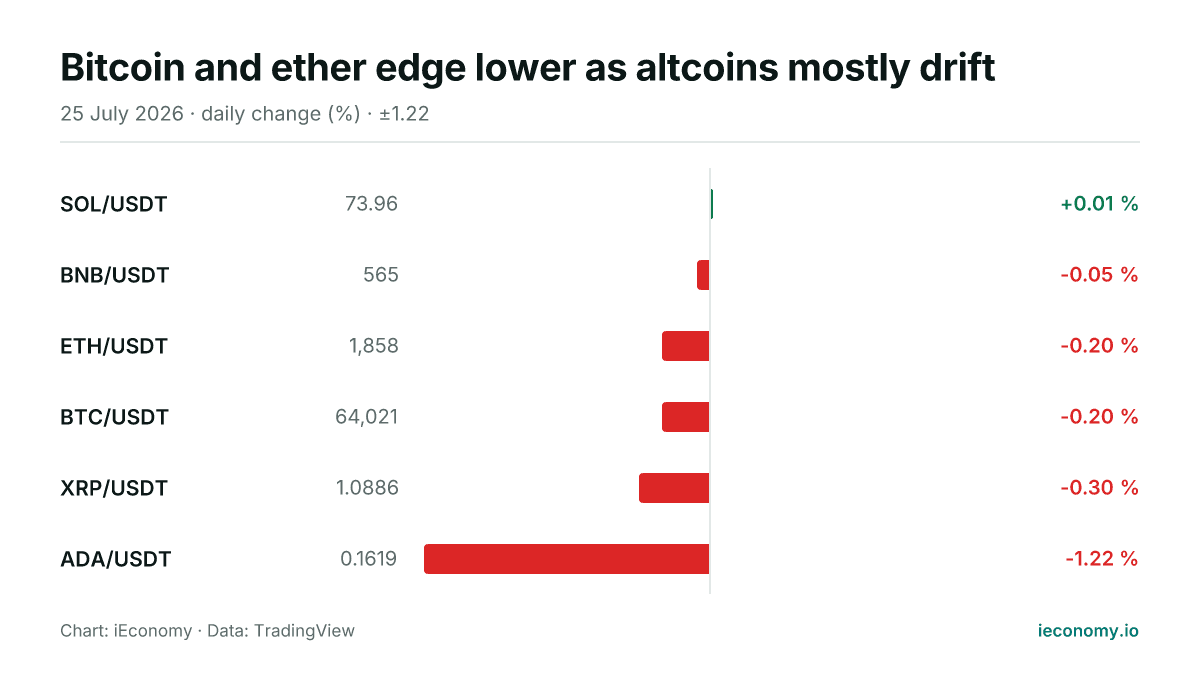
Bitcoin and ether edge lower as altcoins mostly drift
Crypto traded subdued on Saturday, with one large-cap token slightly higher and the rest either modestly lower or nearly unchanged. Bitcoin and ether both slipped 0.20%, while Cardano lagged the pack and Solana was effectively flat.
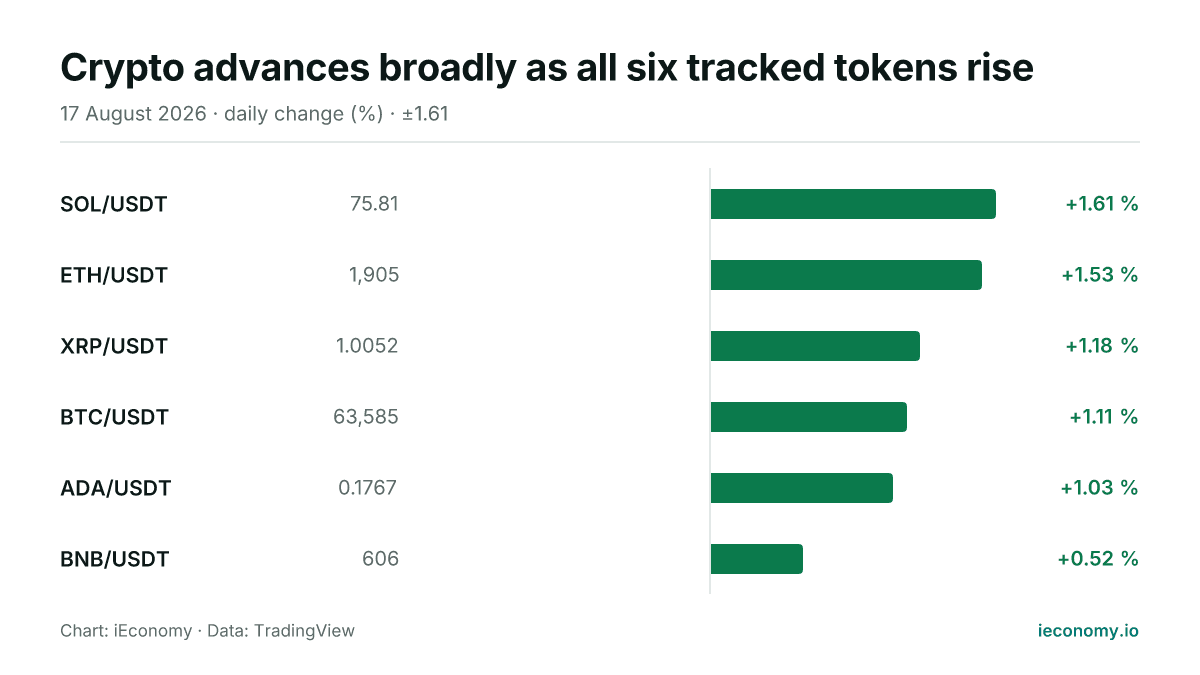
Crypto advances broadly as all six tracked tokens rise
Bitcoin, ether and the larger altcoins all moved higher on Monday, with SOL and ETH leading the group. The day’s action was broad-based rather than concentrated, a pattern that can matter for short-term market tone.