Bitcoin quantum defenses advance as Solana cuts inflation
Bitcoin testing on-chain quantum-resistant spending and Solana validators backing a plan to reduce token emissions highlighted a week of protocol-level change across crypto markets.

Jorge Franganillo / Wikimedia Commons (CC BY 2.0)
Bitcoin’s push toward a post-quantum design took another small step this week as researchers tested an experimental protection on the mainnet. The move is meant to reduce the risk that exposed public keys could be targeted once they appear in the mempool, a part of the transaction process that remains vulnerable for a short time. The test spent a 10,000-satoshi output using a scheme designed to tie spending authority to a specific transaction.
Bitcoin tests quantum-resistant spending
The experiment was carried out by StarkWare researcher Avihu Levy, who used a quantum-safe approach called Quantum Safe Bitcoin. The method combines hash-based one-time signatures with a search process that binds authorization to a particular transfer. It is not meant as a routine payment tool; the design is closer to an emergency defense if quantum attacks become a practical concern.
Even so, the test matters because Bitcoin development has long been cautious about changes to the base protocol. The effort shows that some builders are already preparing for a future in which current cryptographic assumptions may need to be replaced or supplemented. For now, the technology remains experimental and expensive to use, with transactions taking hours to complete.
Solana validators vote to slow token growth
Solana was also in focus after validators agreed to reduce the network’s inflationary pressure. The proposal would curb what backers see as excessive token issuance and is intended to make the supply schedule less aggressive over time. That change would affect how quickly new SOL enters circulation, a key issue for holders watching dilution and network economics.
The reported figure tied to the decision was 18.9 million SOL, described as cancelled in the digest headline. The broader point is that validator governance is still shaping the economic rules of major blockchains, not just their technical road maps. In Solana’s case, the discussion centers on balancing incentives for validators with longer-term token scarcity.
The digest also pointed to a bullish Bitcoin case from Bernstein, which sees the token peaking at $500,000 in this cycle. That view sits alongside the week’s protocol developments and underscores how market narratives remain split between long-term technical risks and aggressive price expectations. For investors, the combination highlights a crypto market still driven by both engineering changes and speculative conviction.
This article is not investment advice and recommends no asset, level or direction; a single session's move is not evidence of a trend. For background see Crypto, Altcoin, Bitcoin, and for terms the finance glossary.
Frequently asked questions
What did Bitcoin developers test this week?
They tested an experimental quantum-resistant transaction on Bitcoin’s mainnet to protect a spend while public keys are exposed.
What change did Solana validators agree to?
They agreed to curb inflationary token issuance, which would slow the pace at which new SOL enters circulation.
What price call did Bernstein make for Bitcoin?
Bernstein said Bitcoin could peak at $500,000 in this cycle.
Sources
Related News
Bitcoin demand test builds above $83,000
Glassnode says Bitcoin is pressing into a dense band of overhead supply between $81,000 and $86,000, where long-term holders and key trend lines may cap momentum.
Bitcoin ETF inflows cool as BTC stays below $80K
US spot Bitcoin ETFs drew $232.1 million on Wednesday, easing from the prior session as Bitcoin slipped back under $80,000 and the funds’ eight-day run reached $2.8 billion.

Solana transactions hit 4.2 billion as SOL rebounds
Solana logged a record 4.2 billion transactions in July while tokenized real-world assets on the network rose toward $4 billion and SOL climbed about 40%.

Coinbase shares fall on wider-than-expected quarterly loss
Coinbase reported a deeper second-quarter loss and missed Wall Street estimates again, even as subscription revenue grew to a larger share of the business.
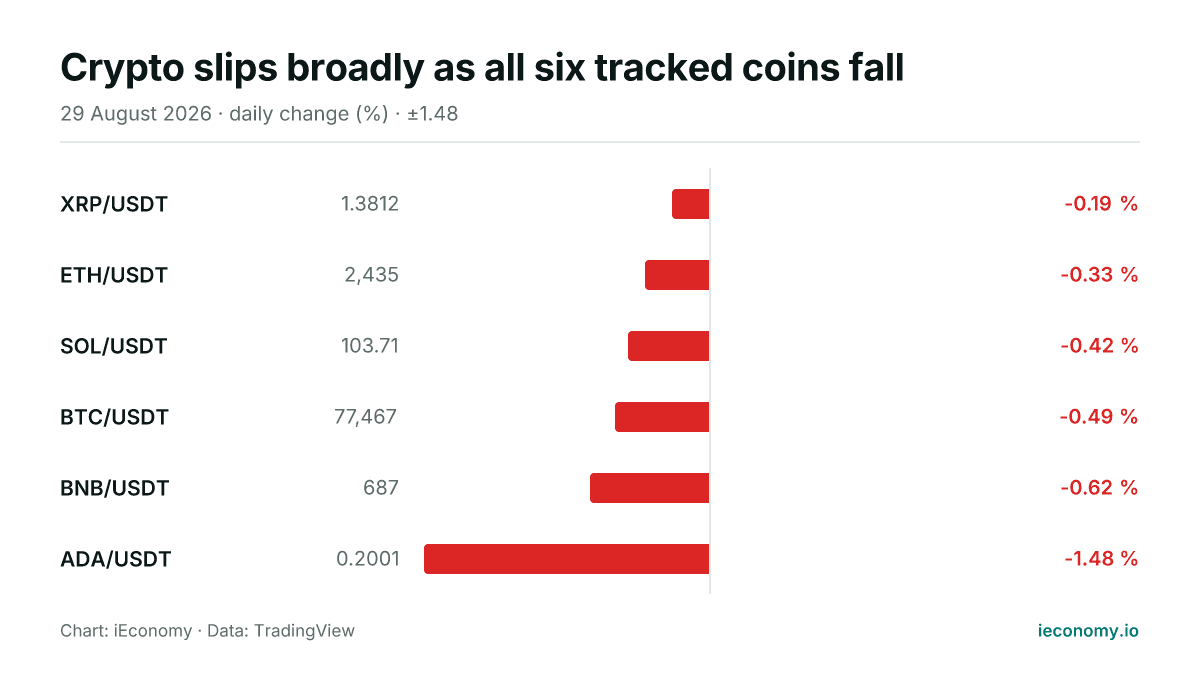
Crypto slips broadly as all six tracked coins fall
Bitcoin, ether and the large-cap altcoins were mostly lower on Saturday, with no token in the digest advancing. The moves were modest for most names, though ADA lagged the group.

Bitcoin security consortium pledges $15M for quantum risk
Strategy and BlackRock are backing a new consortium with $15 million over three years to fund work on Bitcoin’s quantum security and open-source defenses.